Cloud Storage Services That Freelancers Should Trust in Coming Years
16 July 2026
Freelancers operate in a unique space when it comes to data management. Unlike large enterprises with dedicated IT teams and unlimited budgets, freelancers must balance cost, reliability, security, and accessibility on their own. The cloud storage service you choose today will affect your workflow, client trust, and long-term scalability. This article provides a practical, no-nonsense breakdown of what to look for, which services will hold up over the next three to five years, and why some popular options may not be the best fit for your actual needs.

Why Cloud Storage Decisions Matter More for Freelancers
A freelancer's digital assets are their business. Proposals, contracts, design files, code repositories, client communications, and backups all live in the cloud or on local drives that sync to the cloud. The wrong service can lead to lost work, security breaches, unexpected costs, or workflow friction that eats into billable hours.Many freelancers make the mistake of treating cloud storage as a commodity. They pick the cheapest option or the one with the most free space. That approach works for personal photos but fails when you need version history, file locking, client sharing with access controls, or integration with tools like Slack, Trello, or Adobe Creative Cloud. The coming years will see increased regulatory pressure on data privacy, more sophisticated ransomware attacks, and tighter integration between storage and productivity platforms. Your choice needs to account for these shifts.
Core Requirements for Freelancer Cloud Storage in 2025 and Beyond
Before evaluating specific services, it helps to define what "trust" actually means in this context. Trust is not just uptime. It includes predictable pricing, strong encryption, cross-platform reliability, and a company with a sustainable business model. Here are the non-negotiable criteria for the coming years:1. End-to-End Encryption and Zero-Knowledge Architecture
You need to assume that any cloud provider could be compromised or compelled to hand over data. Services that offer end-to-end encryption (E2EE) where only you hold the decryption keys are the gold standard. Zero-knowledge architecture means the provider cannot read your files even if they wanted to. This is critical for freelancers handling sensitive client data like legal documents, financial records, or proprietary designs.2. Cross-Platform Synchronization and Offline Access
Freelancers work from co-working spaces, coffee shops, client offices, and home setups. Your storage must sync seamlessly across Windows, macOS, iOS, Android, and Linux without file corruption or sync conflicts. Offline access with intelligent conflict resolution is non-negotiable when you are on a plane or in a location with spotty internet.3. Version History and File Recovery
Accidents happen. You overwrite a file, delete something important, or a client requests a previous iteration. A minimum of 30 days of version history is acceptable, but 120 days or more is better for professional use. Some services offer unlimited versioning for a fee. This feature alone can save you from losing hours of work.4. Client-Facing Sharing with Granular Permissions
You will need to share large files with clients who may not use the same service. Look for password-protected links, expiration dates, download limits, and the ability to prevent downloading while allowing previews. This last feature is especially useful for photographers, videographers, and designers who want to show proofs without giving away high-resolution originals.5. Predictable Pricing Without Hidden Fees
Freelancers hate surprises. A service that offers "unlimited" storage but throttles your speed after 10 GB or charges extra for API access is a trap. Read the fine print on file size limits, bandwidth caps, and multi-device restrictions. The best services for freelancers have transparent per-user or per-terabyte pricing with no gotchas.6. Integration with Your Workflow Tools
Your storage should not be a silo. It needs to integrate with project management tools like Asana or Notion, communication platforms like Slack, and creative software like Adobe Creative Cloud or DaVinci Resolve. Native integrations reduce friction and prevent you from manually moving files between apps.
The Services Worth Your Attention
Not all cloud storage providers are created equal. Some are giants with consumer brands that have added business features. Others are niche players built specifically for professionals who need privacy and control. Here is a candid assessment of the services that will remain reliable through the next few years.Proton Drive: The Privacy-First Choice for Security-Conscious Freelancers
Proton Drive comes from the same team behind Proton Mail. It is built on a foundation of end-to-end encryption and zero-knowledge architecture. All files are encrypted on your device before they are uploaded. Even Proton cannot see your file names, folder structures, or content.Why it works for freelancers: If you work with clients in regulated industries like healthcare, law, or finance, Proton Drive provides the strongest privacy guarantees. It also offers encrypted file sharing with password protection and expiration dates. The service is based in Switzerland, which has some of the strongest data protection laws in the world.
Trade-offs: Proton Drive is newer than competitors. It lacks some advanced features like block-level sync, extensive third-party integrations, and native Linux support (though it works via the web interface). Storage plans are smaller per dollar compared to mainstream options. You get 1 TB for roughly $10 per month, which is fair but not the cheapest.
When to use it: Choose Proton Drive when client confidentiality is your top priority. Avoid it if you need deep integration with Windows Explorer or macOS Finder, or if you require advanced collaboration features like real-time co-authoring on documents.
Sync.com: Zero-Knowledge Storage with Strong Collaboration Features
Sync.com is a Canadian provider that has been quietly building a solid reputation for secure storage with a focus on team collaboration. It offers end-to-end encryption by default, which is rare among mainstream providers. The service is designed for small businesses and freelancers who need to share files securely without teaching clients how to use encryption tools.Why it works for freelancers: Sync.com provides granular sharing permissions including the ability to set passwords, expiration dates, and download limits. The "File Requests" feature lets clients upload files directly to your Sync account without needing an account themselves. This is extremely practical for collecting assets from clients. Version history goes back 30 days on the basic plan and 180 days on higher tiers.
Trade-offs: The desktop sync client works well on Windows and macOS but is less polished than Dropbox or Google Drive. Mobile apps are functional but not as feature-rich. There is no native Linux client. Sync.com also lacks the ecosystem integrations of Google Workspace or Microsoft 365.
When to use it: Use Sync.com when you need strong privacy but also require easy client-facing file sharing. It is a good middle ground between security and usability. Avoid it if you work extensively in the Linux environment or need seamless integration with Adobe or other creative tools.
pCloud: The Lifetime Plan Option with Media Optimization
pCloud stands out for offering lifetime subscription plans. Instead of paying monthly or yearly, you can pay once for 500 GB or 2 TB and own that storage for life. This is attractive for freelancers who want to control long-term costs. pCloud also offers client-side encryption as an add-on called pCloud Crypto.Why it works for freelancers: pCloud has excellent media preview capabilities. It can stream video files directly, which is useful for videographers and animators. The file versioning system keeps up to 30 days of history for deleted or modified files. The desktop client includes a virtual drive that does not consume local storage space, which is helpful if you work with large media libraries on a laptop with limited SSD capacity.
Trade-offs: The base encryption is not zero-knowledge. You must pay extra for pCloud Crypto to get client-side encryption. Without it, pCloud can technically access your files. The lifetime plan is a significant upfront investment, and if the company goes out of business, you lose that investment. pCloud is based in Switzerland, which is good for privacy, but the company's long-term viability is not as proven as Google or Microsoft.
When to use it: Choose pCloud if you have a large media library and want to avoid recurring subscription fees. The lifetime plan makes sense if you plan to use the service for more than three to four years. Avoid it if you require zero-knowledge encryption out of the box or if you prefer to spread costs monthly.
Dropbox: The Established Standard with New Security Features
Dropbox has been around for over 15 years and remains the most widely used cloud storage for professionals. Despite criticism about privacy and pricing, Dropbox has invested heavily in security features like Dropbox Passwords, watermarking for shared files, and advanced sharing controls. It also integrates with over 300,000 apps through its API.Why it works for freelancers: Dropbox's sync engine is still the most reliable and fast. It handles large files well, and the Smart Sync feature lets you see all your files in Finder or File Explorer without downloading them. The file request feature is excellent for collecting deliverables from clients. Dropbox Paper provides a lightweight document collaboration tool that is useful for project planning.
Trade-offs: Dropbox is expensive. The Professional plan (for individuals) costs around $20 per month for 3 TB, and the business plans are even more. The company has had security incidents in the past, and while they have improved, the zero-knowledge encryption is not standard. Dropbox uses its own encryption keys, meaning they could theoretically access your data if compelled.
When to use it: Use Dropbox when you need the most reliable sync across multiple devices and extensive third-party integrations. It is the best choice if you collaborate with other freelancers who already use Dropbox. Avoid it if you are on a tight budget or if client-side encryption is a non-negotiable requirement.
Google Drive (with Google Workspace): The Ecosystem Play
Google Drive is not just storage; it is part of a complete productivity suite. For freelancers who live in Google Docs, Sheets, and Gmail, Drive offers seamless integration. The search capabilities are best-in-class, allowing you to find files by content, even within scanned PDFs using OCR.Why it works for freelancers: The sharing system is intuitive. You can set view, comment, or edit permissions for individual files or folders. The 15 GB free tier is generous for documents but fills up fast with photos and videos. Google Workspace plans start at $6 per month for 30 GB, or $12 per month for 2 TB. The integration with Google Meet, Calendar, and Keep makes it a central hub for many freelancers.
Trade-offs: Privacy is a major concern. Google scans your files for various purposes, including advertising targeting and machine learning training. While they claim not to use your data for ads in Workspace accounts, the terms are complex. There is no end-to-end encryption by default. Google Drive also has a history of sync issues with very large files or complex folder structures.
When to use it: Choose Google Drive if you rely on Google's productivity tools and need collaborative document editing. It is excellent for writers, consultants, and freelancers who primarily work with text and spreadsheets. Avoid it if you handle highly sensitive client data or if you need strong encryption without extra tools.
Microsoft OneDrive (with Microsoft 365): The Office Integration
OneDrive is deeply integrated with Microsoft 365, which includes Word, Excel, PowerPoint, and Outlook. For freelancers who use the Microsoft ecosystem, OneDrive provides the most natural file management experience. Files on Demand works similarly to Dropbox's Smart Sync, keeping your local drive clean.Why it works for freelancers: The 1 TB storage included with Microsoft 365 Personal ($70 per year) is an excellent value. You also get the full Office desktop apps, which are still the industry standard for many document types. OneDrive's version history goes back 30 days, and the Personal Vault feature provides an extra layer of security for sensitive files using two-factor authentication.
Trade-offs: Like Google, Microsoft does not offer zero-knowledge encryption. The company can access your files for compliance and security purposes. The sync client works well on Windows but is less reliable on macOS and Linux. Sharing files with non-Microsoft users can sometimes result in formatting issues with Office documents.
When to use it: Use OneDrive if you are committed to the Microsoft ecosystem and need Office apps for client work. It is the best choice for freelancers who create complex spreadsheets, presentations, or documents that require precise formatting. Avoid it if you primarily use Apple or Linux devices or if you need cross-platform reliability.

Common Mistakes Freelancers Make with Cloud Storage
Even experienced freelancers fall into predictable traps. Here are the most common ones and how to avoid them.Mistake 1: Relying on a Single Service for Everything
Putting all your eggs in one basket is risky. If that service goes down, has a security breach, or changes its pricing model, you are stuck. A better approach is to use one primary storage for active work and a separate service for backups. For example, use Dropbox for daily sync and pCloud (with a lifetime plan) for archival backups.Mistake 2: Ignoring Local Backups
Cloud storage is not a backup. It is synchronization. If you delete a file on your computer, it gets deleted from the cloud (unless version history saves you). Ransomware can encrypt your synced files and those changes will propagate to the cloud. You need a separate local backup strategy using an external drive or a NAS device. The 3-2-1 rule still applies: three copies of your data, on two different media, with one copy offsite.Mistake 3: Overlooking File Naming and Organization
Cloud storage search is powerful but not magic. If you name files "final_v3_final_reallyfinal.docx" you will create chaos. Develop a consistent naming convention that includes dates, project names, and version numbers. Use folder structures that mirror your workflow. This pays off when you need to find a file two years later.Mistake 4: Not Checking Bandwidth and File Size Limits
Some services limit the size of individual files you can upload or share. Google Drive allows up to 5 TB for a single file, but some plans limit sharing to 10 GB per day. If you are a video editor sharing 4K files, these limits can halt your workflow. Always check the fine print before committing.Mistake 5: Using Free Tiers for Client Work
Free tiers are tempting but come with risks. They often have limited support, slower sync speeds, and no guarantee of data retention if you stop using the service. More importantly, free accounts may not comply with data protection regulations if you handle client data. Always use a paid plan for professional work.Best Practices for a Trusted Cloud Storage Setup
Building a reliable cloud storage system requires more than picking a service. It involves configuring it correctly and establishing habits that protect your data.Separate Personal and Professional Storage
Do not mix your family photos with client files. Use separate accounts or at least separate folders with different sharing settings. This prevents accidental sharing of personal data with clients and makes it easier to manage permissions.Enable Two-Factor Authentication
Every major cloud service supports 2FA. Use it. Prefer app-based authenticators over SMS, as SIM-swapping attacks are becoming more common. This single step prevents most account takeovers.Use Strong, Unique Passwords
Your cloud storage password should not be reused anywhere else. Use a password manager to generate and store complex passwords. Services like Bitwarden or 1Password are worth the investment.Regularly Audit Shared Links
Clients may still have access to files they no longer need. Periodically review your shared links and revoke those that are outdated. This reduces the attack surface and prevents accidental exposure.Set Up Automated Backups
Use tools like Duplicati, Arq, or Rclone to create encrypted backups of your cloud storage to a second provider or a local drive. Automation removes the human error factor. Test your backups quarterly by restoring a random file to verify integrity.
The Future of Cloud Storage for Freelancers
Several trends will shape the landscape over the next three to five years.Decentralized Storage Will Gain Traction
Services like Storj and Filecoin use blockchain-based networks where your files are encrypted, split into pieces, and stored across multiple nodes worldwide. This eliminates the single point of failure and offers strong privacy. However, these services are still maturing. The user experience is not as polished as traditional providers, and recovery times can be slower. For now, they are best suited for archival storage rather than active work.AI-Powered File Management
Google Drive and Dropbox are already integrating AI to help you find files, summarize documents, and generate metadata. This will become more sophisticated, allowing you to search by visual content ("find photos of the client's logo") or by conversation context. The trade-off is that AI features require processing your data, which may conflict with privacy requirements.Increased Regulation
The European Union's GDPR and similar laws in other regions are tightening data sovereignty requirements. If you work with clients in the EU, you may need to choose a provider that stores data within the EU or offers data residency options. This will make providers like Proton Drive (Switzerland) and Tresorit (Switzerland/Hungary) more attractive for international freelancers.Hybrid Local-Cloud Solutions
More freelancers will adopt hybrid approaches where they keep active project files on a local NAS (like Synology or QNAP) and sync specific folders to the cloud for client access. This gives you full control over your data while still providing the convenience of cloud sharing. The initial cost is higher, but the long-term control and privacy benefits are significant.Final Recommendations
No single cloud storage service is perfect for every freelancer. Your choice depends on your specific workflow, data sensitivity, and budget.- For maximum privacy with client data: Use Proton Drive or Sync.com. Accept the trade-offs in ecosystem integration.
- For maximum reliability and integration: Use Dropbox if you can afford it. It remains the gold standard for sync speed and third-party app support.
- For budget-conscious freelancers with media workloads: Consider pCloud's lifetime plan. The upfront cost is high, but it pays off over years.
- For freelancers embedded in Google or Microsoft ecosystems: Use Google Drive or OneDrive respectively. The integration benefits outweigh the privacy concerns for most users, but be aware of the limitations.
- For a layered approach: Use Dropbox for daily work, pCloud (lifetime) for archiving, and a local external drive for weekly full backups. This covers sync, long-term storage, and disaster recovery.
The coming years will bring more options and more complexity. Stay informed, audit your setup annually, and never assume that a provider's current policies will remain unchanged. Your data is your business. Treat it that way.
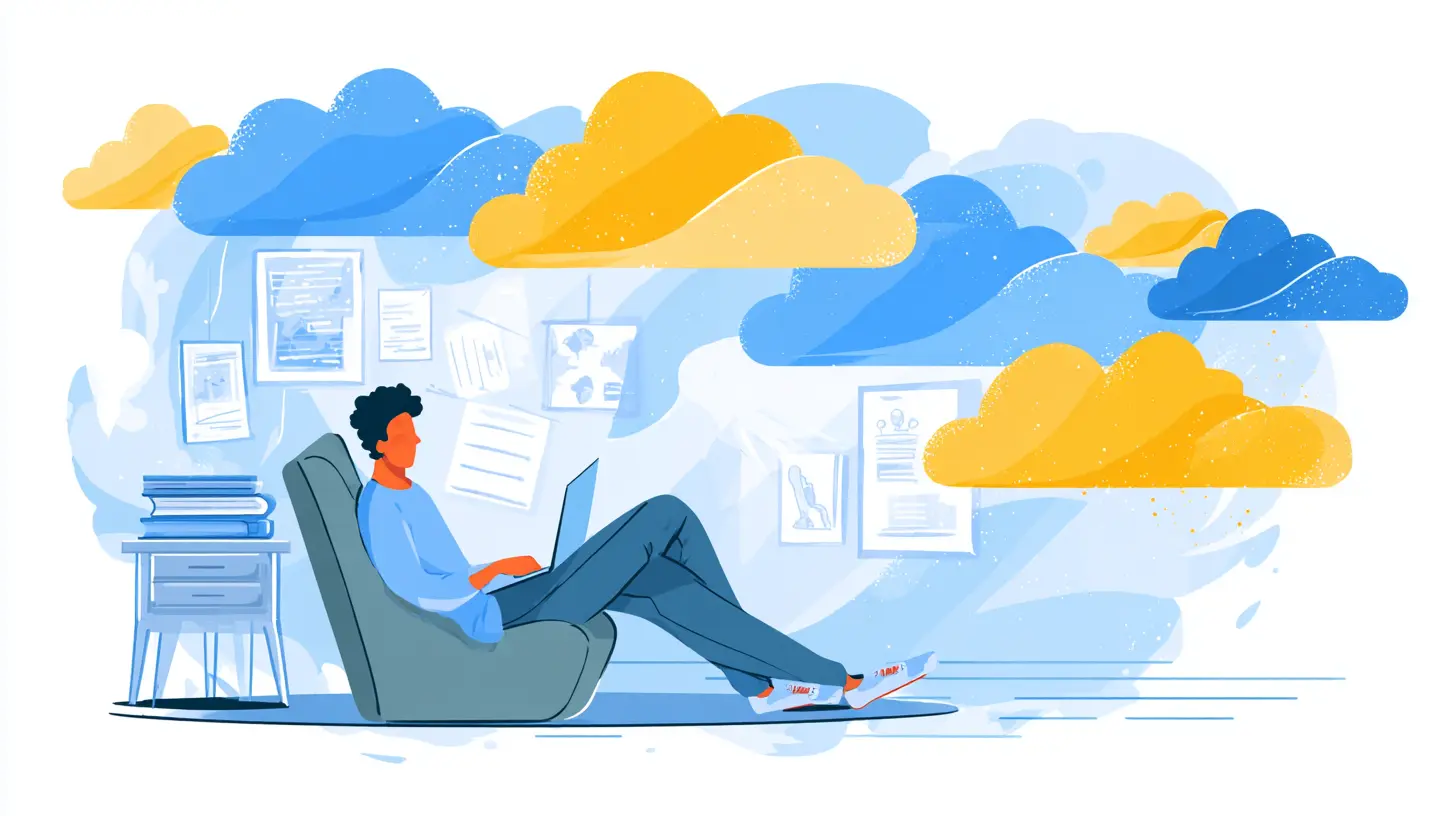
all images in this post were generated using AI tools
Category:
Tech For FreelancersAuthor:

John Peterson
Discussion
rate this article
1 comments
Kayla Lane
As freelancers navigate the evolving digital landscape, choosing reliable cloud storage is crucial. These services not only safeguard your work but also enhance collaboration and efficiency. Embrace the future with confidence, knowing that the right tools can empower your creativity and drive your success.
July 18, 2026 at 4:12 AM