How AI Will Transform Freelancing in the Near Future
31 August 2026
Let's cut the crap right now. You have heard the doom loop a thousand times: AI is coming for your clients, your rates, and your reason to exist. Every LinkedIn influencer with a course to sell has told you to "embrace AI or die." And honestly, that is both true and useless advice. The real story is messier, more interesting, and far more profitable for people who actually understand how this plays out.
Freelancing is not dying. The way you run your freelance business is dying. Those are two completely different things. The solo operator who charges by the hour and waits for an inbox ping is in serious trouble. The freelancer who sells outcomes, not effort, is about to have the best decade of their life. Let me show you why.

The End of the Hourly Billing Illusion
The hour is a terrible unit of value. It punishes speed, rewards inefficiency, and ties your income to your physical capacity to type. AI does not just threaten the hourly model. It obliterates it.Think about what happens when a client can get a first draft of a blog post, a basic logo concept, or a functional code snippet in thirty seconds. The moment that happens, the question "how many hours will this take?" becomes irrelevant. The client stops caring about your time and starts caring about your judgment. They need someone who knows what to do with that draft, how to fix it, what to throw away, and what the strategic goal actually is.
I have seen freelancers panic about this. They think, "If a tool can do the base work, why do they need me?" Wrong question. The right question is, "If a tool can do the base work, why would they pay me for base work?" They will not. They will pay you for the part the tool cannot do: deciding what matters, navigating ambiguity, and taking responsibility for the final result.
The smart play is to stop quoting hours entirely. Quote outcomes. "I will write a conversion-focused landing page that targets these three buyer personas" is a statement of value. "I will spend six hours on a landing page" is a confession of weakness. When you move to outcome-based pricing, AI becomes your leverage, not your competition. You can produce that landing page in two hours instead of six, keep the same price, and triple your effective hourly rate without ever mentioning hours again.
The Rise of the AI-Orchestrator Role
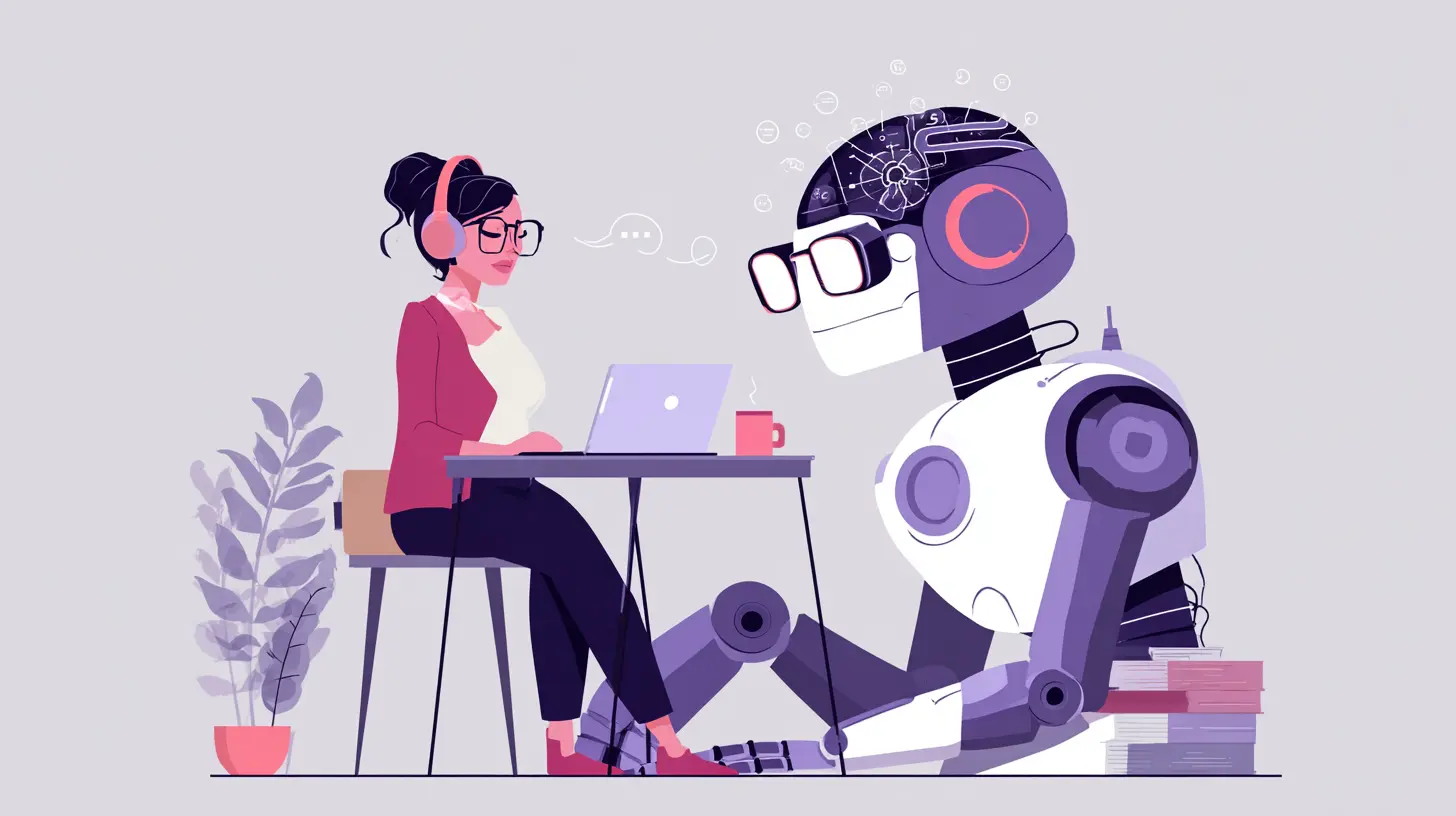
Here is a term you will hear more often: the orchestrator. Not the writer, not the designer, not the developer, but the person who runs a team of AI agents and then does the human work on top.A solo freelancer is no longer a single brain. You are a project manager for a workforce that never sleeps, never complains, and costs less than a coffee subscription. But that workforce is dumb as rocks without direction. AI does not have taste. It does not have context. It does not know that your client's CEO hates the color purple because of a bad merger in 2019. You know that. That is your job.
Let me give you a concrete example. A freelance copywriter I know does not write first drafts anymore. She uses a language model to generate five different angles for a sales email. Then she spends her time evaluating those angles against the client's brand voice, the market position, and the specific pain points she uncovered in a discovery call. She edits ruthlessly, adds the nuance the model missed, and delivers a final piece that is better than anything she could have written alone in the same time. She charges the same rate. She does three times the volume. Her clients think she is a genius.
That is the orchestrator role. It requires a shift in mindset. You stop being the person who does the work and start being the person who directs the work. That is harder than it sounds. It requires you to be brutally honest about what you actually bring to the table. If your only skill was typing fast and formatting paragraphs, you have a problem. If your skill is understanding what the client needs before they articulate it, you are safe.
The Commoditization of Basic Skills
Let's be brutally honest about the lower end of the market. The basic tasks are getting commoditized fast. Simple blog posts, generic social media graphics, boilerplate code, standard data entry, basic translation. If a task can be described in a single sentence and has a clear right answer, AI will do it for pennies.This is not a tragedy. This is a market correction. The freelance market was flooded with people who offered low-skill services at low prices. That pool is evaporating. If you were competing on price alone, you were always one bad month away from being replaced by someone cheaper. Now you are being replaced by something cheaper.
The mistake is to fight this. Do not try to be the cheapest human. You will lose. Do not try to hide your use of AI either. Clients are not stupid. They know the tools exist. Pretending you do not use them makes you look either dishonest or incompetent.
Instead, move up the value chain. The tasks that survive are the ones that require judgment, taste, empathy, and accountability. A client can get a hundred versions of a logo. They cannot get a hundred versions of "here is why this logo will resonate with your specific customer base and how we will test it across three different market segments." That is your value.
I see freelancers making the mistake of trying to do everything. They want to be the writer, the editor, the SEO expert, the social media manager, and the strategist. That is a recipe for mediocrity. AI lets you do more, but it does not let you do everything well. The best freelancers will become specialists in the parts of the work that require human intelligence, and they will use AI to handle the drudgery that used to eat their evenings.
The Client Relationship Gets More Complex
Here is something nobody talks about. AI is not just changing how you work. It is changing how clients think about hiring. And that is a double-edged sword.On one hand, clients have more options. They can try to DIY with AI tools. They will do this, and they will produce garbage, and then they will come back to you. That is your opportunity. The first wave of AI adoption is going to create a massive wave of bad content and broken code. Someone has to fix it. That someone is you.
On the other hand, clients are becoming more demanding. They know what AI can do, so they expect faster turnarounds and lower prices. You need to push back on this, not by arguing, but by reframing the conversation. When a client says, "Can't I just do this with ChatGPT?" your answer should not be "no." Your answer should be, "You can, and you will get a generic result that looks like everyone else's generic result. Is that what you want for your brand?"
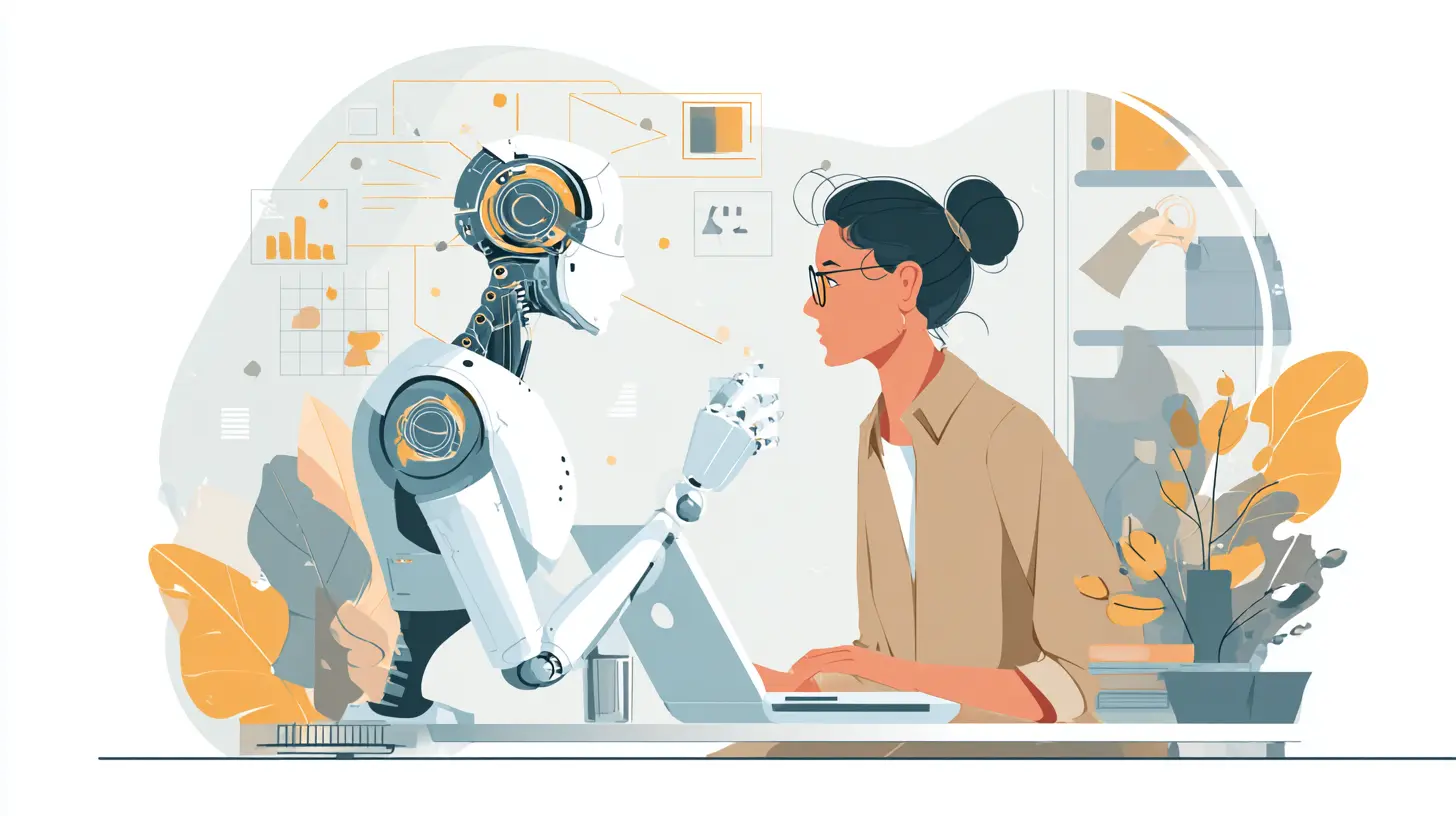
The client relationship is shifting from "hire a pair of hands" to "hire a brain." That means you need to be more proactive. You need to bring ideas to the table, not just execute instructions. You need to understand the client's business goals, not just their stylistic preferences. The freelancers who thrive will be the ones who act like fractional executives, not like remote workers.
This is also where trust becomes critical. You are going to use AI tools. You need to be transparent about that, but you also need to set boundaries. There is a difference between using AI to help you think and using AI to fake expertise. If you are a copywriter who uses AI to check grammar, that is fine. If you are a copywriter who uses AI to write a technical article about a subject you know nothing about, you are committing fraud. The client will find out, and your reputation will be toast.
The New Economics of the Side Hustle
The barrier to entry for freelancing is collapsing. That sounds good, but it is actually a problem for established freelancers. Here is why.Anyone can now start a freelance business. You do not need to be a great writer to produce a decent blog post with the right tools. You do not need to be a great designer to generate a passable logo. This means the market is about to be flooded with new entrants who are willing to work for very little because they do not know any better.
Do not panic. The flood is mostly noise. Most of these new freelancers will produce generic work, burn out in six months, and quit. But a few of them will be sharp. They will use AI to punch above their weight, and they will compete with you for clients.
Your defense is not to get cheaper. Your defense is to get more specialized. The generalist freelancer is in the most danger. If you are a "writer" who can write about anything, you are competing with a tool that can write about anything. If you are a writer who specializes in B2B SaaS cybersecurity compliance, you are in a different universe. The tool does not have your industry knowledge, your network, or your track record.
The economics also change for the freelancer's own business operations. You can now run your entire back office with AI. Invoicing, scheduling, email follow-ups, proposal drafting, contract review. That used to take hours a week. Now it takes minutes. That is time you can spend on client work or on marketing. The freelancers who treat their own business like a business, not a hobby, will have a massive advantage.
The Quality Paradox
Here is a counterintuitive truth: AI is going to make quality more important, not less. When everyone can produce content at the push of a button, the market gets flooded with mediocrity. The signal-to-noise ratio drops. Clients get overwhelmed. They start looking for ways to cut through the noise.That is where you come in. The value of a human touch, a unique perspective, a voice that does not sound like a robot, goes up when the default is robotic. The problem is that most freelancers are not actually that good. They were coasting on being slightly better than the average. Now they are competing against a tool that is slightly better than the average at everything.
The freelancers who win will be the ones who are genuinely exceptional at something. Not good. Exceptional. That is a high bar. It means you need to invest in your craft, not just in your tool stack. You need to read, practice, get feedback, and develop a point of view. AI can help you get from good to great faster, but it cannot make you great if you have nothing to say.
I see a lot of freelancers making the mistake of using AI to produce more volume. They think, "I can write ten articles a week now instead of three." That is a trap. Ten mediocre articles are worse than three great ones. The market is rewarding quality more than ever because quality is rarer than ever. Use AI to make your best work better, not to make your average work faster.
The Portfolio Problem
Your portfolio is about to become either your greatest asset or your biggest liability. Here is why.Clients are going to start asking, "Did you write this yourself?" Not because they care about your process, but because they want to know if you can do it without AI. If your portfolio is full of pieces that look like they were written by a language model, you are in trouble. If your portfolio shows a distinct voice, original thinking, and results, you are golden.
The problem is that AI can make everyone's work look the same. The default output of a language model is competent, bland, and forgettable. If you are using AI to write everything, your portfolio will reflect that. It will be technically fine but emotionally dead.
The solution is to be deliberate about what you show. Curate your portfolio to highlight the work that required human insight. Show the case studies, the strategy, the results. Do not just show the final product. Show the thinking behind it. That is what clients cannot get from a tool.
Also, be honest about your process. If a client asks if you use AI, do not lie. Say yes, you use it for research and drafting, but you bring the expertise and the final judgment. The clients who are worth working with will respect that. The clients who want to pay $50 for a thousand-word article are not worth working with anyway.
The Skills You Need to Develop Now
Let's get practical. If you want to survive and thrive in the next few years, here is what you need to work on.First, prompt engineering. Not the "write a blog post about X" kind of prompting. The kind where you know how to break a complex task into steps, how to give the model context, how to iterate, and how to evaluate the output. This is a real skill. It takes practice. It is not just typing a sentence into a box.
Second, editing and evaluation. The ability to look at AI output and know what is wrong with it, what is missing, and what needs to be changed. This is the most valuable skill you can have. It requires deep knowledge of your domain. You cannot edit a technical article if you do not understand the technology.
Third, client communication. The soft skills become hard skills. You need to be able to explain complex ideas simply, manage expectations, and push back when necessary. AI does not do this. It cannot read a client's tone and adjust. It cannot sense that the client is unhappy and ask the right questions. You can.
Fourth, business development. The freelancers who succeed will be the ones who can sell. Not just pitch, but build relationships, find opportunities, and close deals. AI can help you draft a proposal, but it cannot build a relationship. That is on you.
The Dark Side You Need to Watch For
Let's not be naive. There are real dangers here. The first is dependency. If you rely on AI for everything, your skills will atrophy. You will lose the ability to think from scratch. That is a slow death.The second is the homogenization of your work. If you use the same tools as everyone else, your work will start to look like everyone else's. That is a race to the bottom. You need to actively fight this by injecting your personality, your experience, and your unique perspective into everything you produce.
The third is ethical and legal trouble. AI can generate content that is derivative of copyrighted material. It can hallucinate facts. It can produce biased output. You are responsible for what you deliver. You cannot blame the tool. That means you need to verify everything, fact-check everything, and be prepared to stand behind your work.
The fourth is the client relationship risk. If you deliver work that is clearly AI-generated and you did not disclose it, you will get caught. The tools for detecting AI content are getting better. The clients are getting smarter. Your reputation is your most valuable asset. Do not trade it for a few hours of saved time.
The Practical Playbook for Right Now
Stop reading and start doing. Here is what you should do this week.Audit your services. Look at what you offer and ask yourself, "Can a tool do this better, faster, or cheaper?" If the answer is yes, change what you offer. Add a strategic layer. Add a consulting component. Add a guarantee of results.
Redesign your pricing. Move away from hourly billing. If you cannot move entirely, at least create packages that are based on outcomes. A package for a complete blog post with strategy and SEO. A package for a landing page with A/B testing recommendations. A package for a code review with security analysis.
Invest in your niche. Pick one industry, one type of client, one problem you solve better than anyone else. Go deep. Become the go-to person for that specific thing. AI cannot match deep domain expertise.
Build your process. Create a workflow that uses AI where it helps and your brain where it matters. Document it. Refine it. Make it repeatable. That is your product. That is what you are selling.
Finally, get comfortable with being uncomfortable. The next few years are going to be chaotic. Some of your assumptions will be wrong. Some of your clients will leave. Some of your skills will become obsolete. That is fine. The freelancers who adapt, who keep learning, and who refuse to be defined by the tools they use will come out ahead.
The future of freelancing is not about humans versus machines. It is about humans who know how to use machines versus humans who do not. The machines are not taking your job. The freelancer who knows how to use the machines is taking your job. Do not be that freelancer. Be the other one.
all images in this post were generated using AI tools
Category:
Tech For FreelancersAuthor:

John Peterson
Discussion
rate this article
2 comments
Kael Martinez
AI is set to revolutionize freelancing by enhancing efficiency, personalizing client experiences, and opening new opportunities for remote work.
September 24, 2026 at 5:01 AM
Kenzie Harris
It's exciting to see how AI can empower freelancers by streamlining tasks and opening new opportunities. Change can be daunting, but embracing these tools can lead to growth and innovation in our work lives... Keep an open mind!
September 1, 2026 at 4:16 AM
John Peterson
I appreciate your thoughts! Embracing AI truly has the potential to reshape freelancing for the better. Exciting times ahead!