How Augmented Reality Could Reshape Freelance Opportunities
29 August 2026
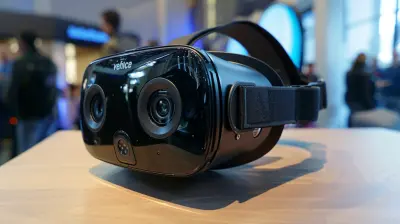
The freelance economy has always been a game of adaptation. Freelancers learn new tools, chase new platforms, and adjust their rates based on market demand. But most of that adaptation has been digital in a two-dimensional sense: better project management software, faster communication channels, and more sophisticated portfolios. The next major shift, however, is likely to be spatial. Augmented reality, or AR, is no longer just a gimmick for gaming or a demo tool for tech conferences. It is quietly becoming a practical layer for how work gets done, and for independent professionals, that layer could change the very nature of the services they sell.
This is not about wearing bulky headsets all day. Most practical AR today runs on smartphones and tablets, with the occasional use of smart glasses for specific tasks. The technology overlays digital information onto the physical world, allowing a user to see measurements, instructions, or 3D models in real time, right where they are needed. For a freelancer, this is not just a cool feature. It is a way to solve problems remotely, to deliver more value per project, and to enter markets that were previously closed to solo operators.
The Shift from Flat Deliverables to Spatial Services
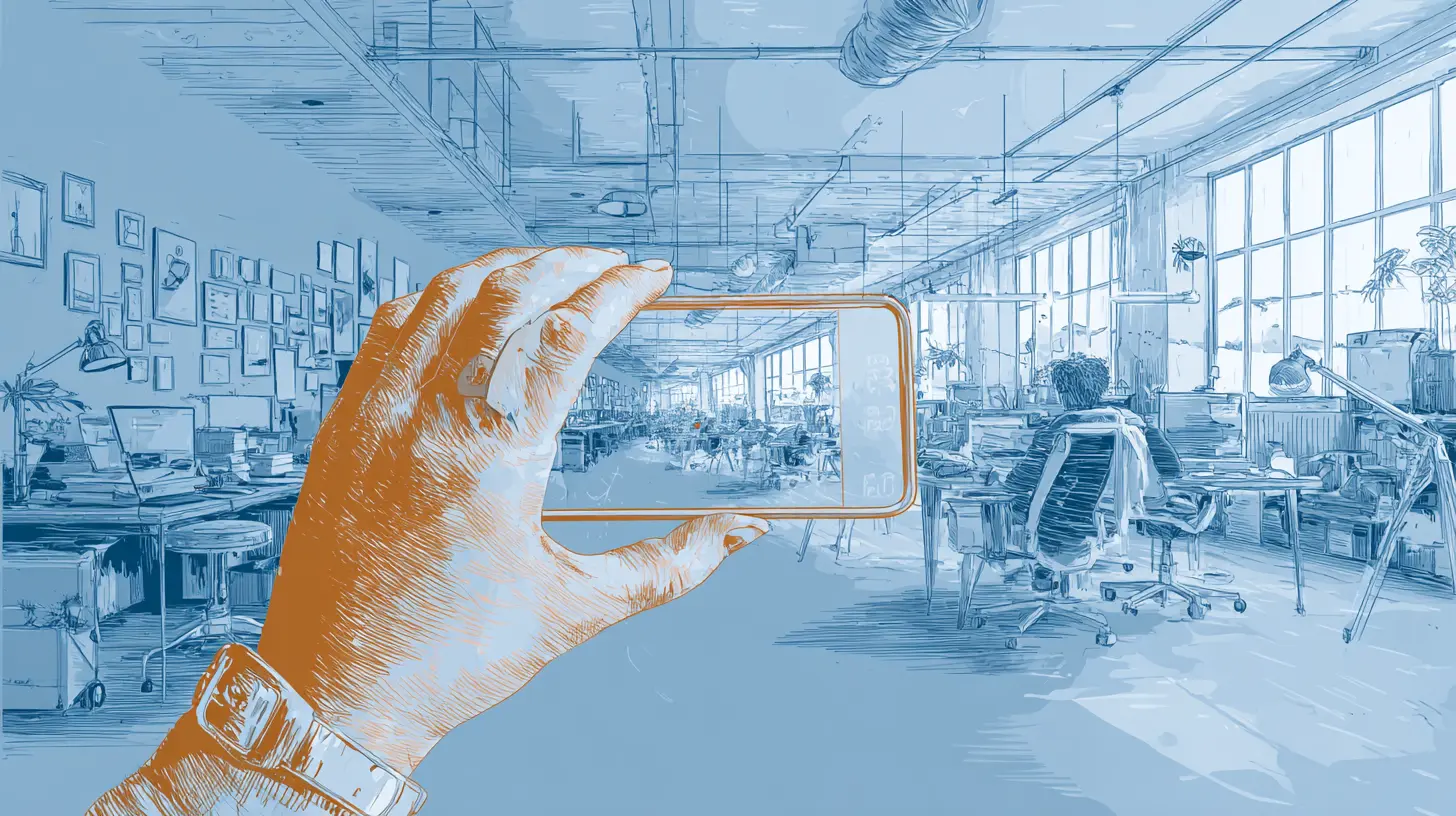
Most freelance work today is delivered as a file: a PDF, a JPEG, a code repository, a video file. The client takes that file and interprets it. An architect sends a floor plan, and the client tries to imagine walking through it. A furniture designer sends a spec sheet, and the client tries to picture the piece in their living room. A mechanic sends a repair guide, and the customer tries to follow the steps in their own garage. The gap between the deliverable and the real-world application is where miscommunication, revisions, and dissatisfaction live.AR collapses that gap. Instead of sending a static drawing, a freelance architect can send a shared AR file that the client opens on their phone. The client walks around their empty apartment, and the furniture, walls, and lighting appear in the room at true scale. They can see how the sunlight hits the kitchen island at 4 PM. They can move a virtual sofa two inches to the left and see if it blocks the hallway. This is not a video or a simulation. It is an interactive experience anchored to the physical space.
This shift changes what it means to deliver a project. The freelancer is no longer selling a representation of a solution. They are selling the solution itself, experienced in context. That has direct implications for pricing, client satisfaction, and the speed of approval. A client who can walk through a design before it is built is far less likely to ask for major revisions after the fact. They feel more confident, and that confidence often translates into a faster final payment and a stronger referral.

How AR Expands the Freelance Service Catalog
The most obvious beneficiaries are in visual fields: interior design, architecture, product design, and marketing. But the real opportunity is broader. Consider a freelance electrician who offers home safety inspections. Instead of traveling to a client's house, they can guide the client through a video call while the client points their phone at the electrical panel. The electrician can drop AR markers on the screen, highlighting a frayed wire or a code violation, and leave a digital note that stays anchored to that exact spot. The client gets a persistent, visual record of the issues, not just a verbal explanation. The freelancer saves travel time, can serve clients in different time zones, and can handle three times the number of inspections in a day.The same logic applies to equipment troubleshooting, plumbing diagnostics, or even fitness training. A personal trainer can use AR to show a client the correct angle for a squat by overlaying a skeleton model on the client's own body on the phone screen. A language tutor can place virtual labels on objects around a student's room to reinforce vocabulary in context. A marketing consultant can use AR to show a client how a new sign would look on their storefront before the sign is manufactured.
The key is that AR does not replace the freelancer's expertise. It amplifies it. It allows the freelancer to be present in multiple places at once, to communicate complex spatial ideas without a physical visit, and to create deliverables that are interactive rather than passive. That opens up new niches that were previously impractical. For example, a freelance heritage preservation specialist can create AR tours of historical buildings for remote visitors. A freelance industrial designer can offer virtual prototyping services to small manufacturers who cannot afford a physical prototype shop.
The Practical Tools and Platforms to Watch
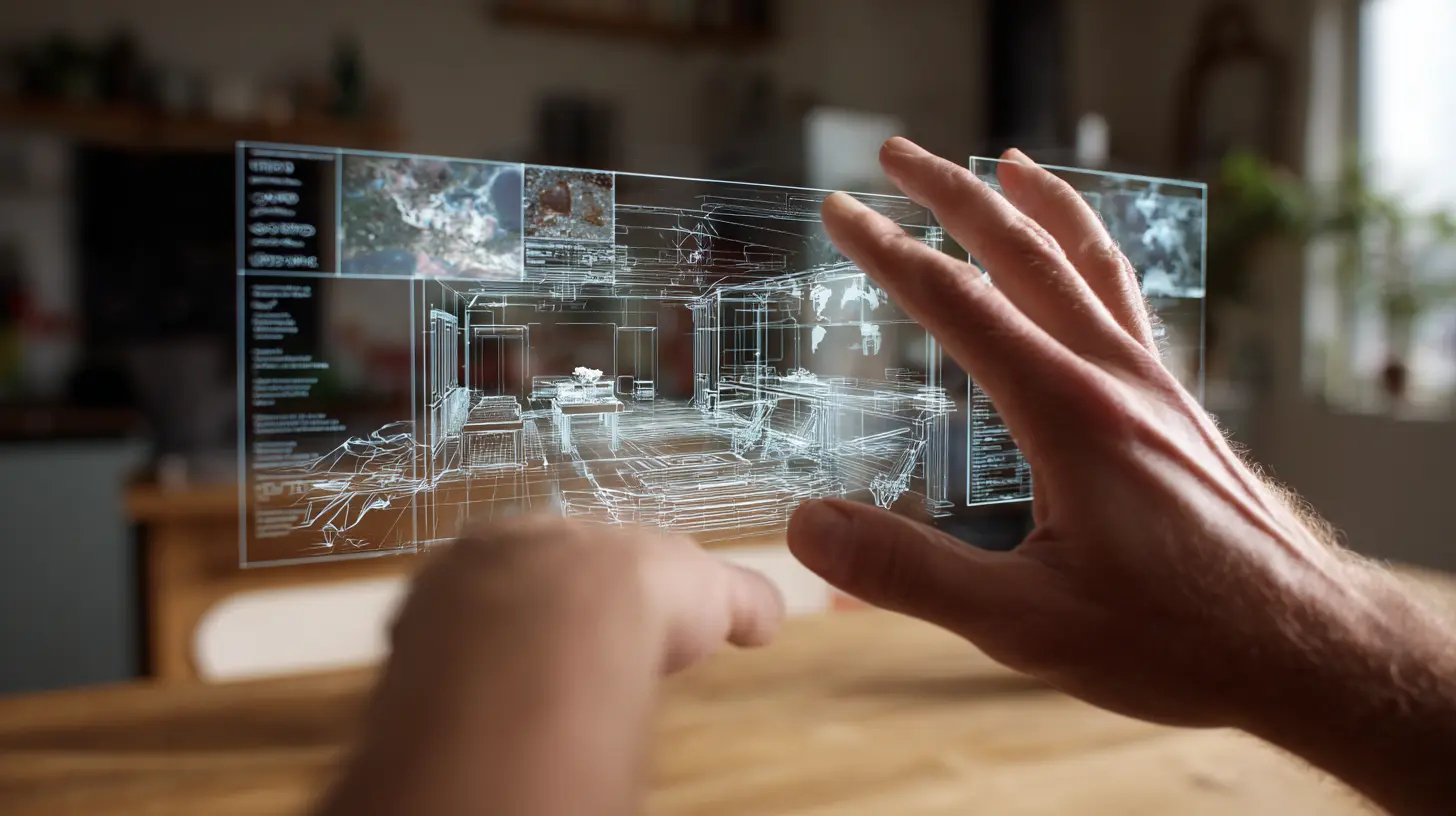
It is tempting to think that AR requires heavy programming skills or expensive hardware. That is a misconception. The current ecosystem is moving toward no-code and low-code solutions. Platforms like Apple's ARKit and Google's ARCore provide the underlying technology, but there are now user-friendly tools built on top of them. For instance, a freelancer can use a tool like Adobe Aero to create a simple AR experience from a 3D model without writing a single line of code. More advanced options include Unity with AR Foundation, which requires some scripting but is well documented and widely used.For freelancers who want to integrate AR into their existing services, the practical path is to start with the phone camera. A real estate photographer can embed AR hotspots in their property photos, allowing a prospective buyer to tap a point on the image and see the dimensions of a room or the location of a built-in closet. A freelance event planner can send clients a QR code that, when scanned, shows a 3D layout of the tables and stage on their kitchen table. The barrier to entry is lower than most people assume, and the hardware requirements are already in the pockets of most clients.
There is also a growing market for AR-specific freelance work. Companies need 3D modelers, AR experience designers, and quality assurance testers who can evaluate how an AR app behaves in different lighting and surface conditions. These are new job titles that did not exist a decade ago. A freelancer who learns to build a simple AR scene in Unity, even without a deep programming background, can offer services to small businesses that want to create their own AR marketing campaigns but do not have the in-house skills.

The Trade-Offs: What AR Does Not Solve
It would be a mistake to present AR as a universal solution. The technology has real limitations that freelancers must account for before they promise results. The most significant is the hardware dependency. While many smartphones support basic AR, the experience is not consistent across devices. An older phone may struggle with tracking, or the AR objects may appear shaky and unstable. A freelancer who builds a beautiful AR experience for a client's high-end tablet may find that the client's own phone renders it poorly. This leads to frustration and a perception that the work is low quality.Another issue is the learning curve for the client. Not every client is comfortable holding their phone up and walking around a room to view a 3D model. Some prefer a simple PDF or a recorded video. Forcing AR on a client who does not want it is a quick way to lose trust. The best approach is to offer AR as an option, not a requirement. For example, a freelance kitchen designer can provide both a traditional 2D layout and an AR view. The client who uses AR will feel more informed, but the client who skips it still has what they need.
There is also the question of time and cost. Creating a polished AR experience takes more effort than producing a flat image. The freelancer must source or create 3D models, test the experience on multiple devices, and provide instructions for the client. This can add hours to a project that was previously straightforward. The freelancer needs to decide whether the added value justifies the added time, and whether the client is willing to pay for it. In some cases, it may be better to use AR as a differentiator for high-end projects rather than a standard feature for every job.
Common Mistakes and Misconceptions
One of the biggest mistakes freelancers make is treating AR as a gimmick. They add an AR component to a project because it sounds impressive, but they do not think about what problem it solves. The result is a clunky experience that frustrates the client and tarnishes the freelancer's reputation. AR must have a clear purpose. If the client does not need to see something in physical space, then AR is the wrong tool. A simple chart or a high-resolution photo is often more effective and more reliable.Another misconception is that AR requires a dedicated app. Many clients and freelancers assume they need to develop a custom application to use AR, which is expensive and time-consuming. In most cases, the opposite is true. Web-based AR, using technologies like WebXR, allows a user to open a link in their browser and view an AR scene without installing anything. This is far more practical for freelance work because it removes the friction of app downloads and account creation. Services like 8th Wall and Blippar offer web-based AR solutions that are accessible to non-programmers.
There is also a tendency to overestimate the visual fidelity of AR. A 3D model on a phone screen will never look as realistic as a physical sample or a high-end render. The lighting is often off, the shadows are not accurate, and the textures may look flat. This is fine if the goal is to understand spatial relationships, but it is not fine if the client is trying to evaluate the exact color and finish of a material. Freelancers should be honest about these limitations and use AR for what it does well: context, scale, and interaction.
Best Practices for Integrating AR into Freelance Work
The first step is to identify the specific point in your workflow where spatial context adds the most value. For a freelance event planner, that might be during the client approval stage. For a freelance fitness coach, that might be during the initial assessment. For a freelance IT consultant, that might be when explaining network setup to a non-technical client. Pick one use case, not five. Master that use case, and then expand.Next, invest in the minimum viable toolset. If you already work with 3D software like Blender or SketchUp, you are halfway there. If not, start with a tool that lets you import simple models and place them in the real world. You do not need to create photorealistic assets for most practical applications. A simple white-box model with correct dimensions is often enough to convey the idea. The goal is to communicate, not to impress with visual effects.
Test everything on multiple devices. If you are designing an AR experience for a client, ask them what phone they use. Test the experience on that specific model if possible. Pay attention to how the AR objects behave in low light, on reflective surfaces, and in outdoor environments. These are the conditions where AR fails most often. If you cannot test on a particular device, state your assumptions clearly in your proposal.
Set expectations early. Explain to the client that AR is a supplemental tool, not a replacement for physical reality. Provide a simple one-page guide on how to use the AR feature, including a QR code and step-by-step instructions. Follow up with the client after they have tried it to see if they had any issues. This follow-up is crucial because it shows that you care about the experience, not just the deliverable.
The Economic Impact on Freelance Pricing and Competition
AR has the potential to change how freelancers compete. In a crowded market, where many designers or consultants offer similar skills, AR can be a differentiator that justifies a premium rate. A freelance product designer who can show a client a virtual prototype in their own office is offering something that a competitor with a static portfolio cannot. That is not just a value-add. It is a shift in the perceived quality of the work.But there is a downside. As AR tools become more accessible, the barrier to entry will drop. In a few years, a basic AR experience may be as standard as a well-formatted PDF is today. Freelancers who rely solely on AR as a novelty will find themselves competing on price again. The lasting advantage will go to those who combine AR with deep domain knowledge. The technology is a tool, not a strategy. The strategy is still about solving the client's problem, and AR simply provides a better way to do that.
There is also a geographic component. For freelancers who work with international clients, AR can reduce the need for travel. A freelance manufacturing consultant can inspect a factory floor remotely, using AR to overlay tolerance measurements on equipment from a smartphone feed. This opens up clients in regions that were previously inaccessible due to travel costs or visa restrictions. It also creates a more level playing field, where a freelancer in a smaller city can compete with a firm in a major hub.
The Future of Remote Collaboration for Freelancers
Beyond individual deliverables, AR is likely to change how freelancers collaborate with clients and with each other. In the near future, a freelance graphic designer and a freelance web developer might work on the same project while seeing the same virtual whiteboard in their respective spaces. They could move a UI element around in 3D space, see how it interacts with a physical object, and then hand off the design directly to the developer in the same AR session. This is not science fiction. Collaborative AR tools are already in development, and the underlying infrastructure is being built by companies like Nvidia and Microsoft.For freelancers, this means that the boundaries between disciplines may blur. A solo freelancer who can handle both the creative and the technical side of an AR project will have an advantage over a specialist who only works in one domain. This is not to say that generalists will replace specialists. Rather, the specialist who understands how their work fits into an AR context will be more valuable. A freelance copywriter, for example, may not need to build AR scenes, but they should understand how spatial interfaces change the way users read and interact with text. That knowledge will inform better writing.
The practical takeaway is to start learning now, before the demand becomes obvious. Spend a weekend learning the basics of ARKit or a simple web AR platform. Create a dummy project for a friend or a local business. See what works and what does not. The skills you build today will be the ones that set you apart in a market that is rapidly moving toward spatial computing. The freelancers who wait until AR is a standard requirement will be playing catch-up. The ones who experiment now will be the ones who set the standards.
all images in this post were generated using AI tools
Category:
Tech For FreelancersAuthor:

John Peterson
Discussion
rate this article
2 comments
Lana McGuffey
Augmented reality has potential, but its impact on freelance work hinges on accessibility and the ability of platforms to integrate this technology effectively.
September 3, 2026 at 3:10 AM
John Peterson
I completely agree. Accessibility will be key for freelancers to leverage augmented reality. The right platform integration can really unlock its potential.
Bear Cruz
This article is a fantastic dive into the world of augmented reality and its potential to boost freelance careers. The possibilities are endless, and it's exciting to think about how AR can open new doors for creativity and collaboration. Here's to embracing these changes and exploring new opportunities together!
August 29, 2026 at 11:49 AM