How Augmented Reality Will Transform Our Everyday Interactions
5 January 2026
Augmented Reality (AR) isn’t just some fancy tech buzzword anymore—it’s rapidly becoming a part of our daily routine. From trying on virtual clothes to navigating cities with digital arrows guiding us in real-time, AR is changing how we see and interact with the world around us. And the best part? We're just scratching the surface.
So, let’s dive into how this revolutionary technology is shaking things up and what it means for your everyday life.
What Exactly Is Augmented Reality?
Before we get too deep in the weeds, let's quickly break down what augmented reality actually is.In simple terms, AR overlays digital information—like images, text, or animations—on top of the real world. Unlike Virtual Reality (VR), which replaces your environment entirely, AR enhances your surroundings by adding helpful or entertaining digital elements.
Think of it like your world wearing a digital pair of glasses—only you don’t need glasses to see what’s added. Cool, right?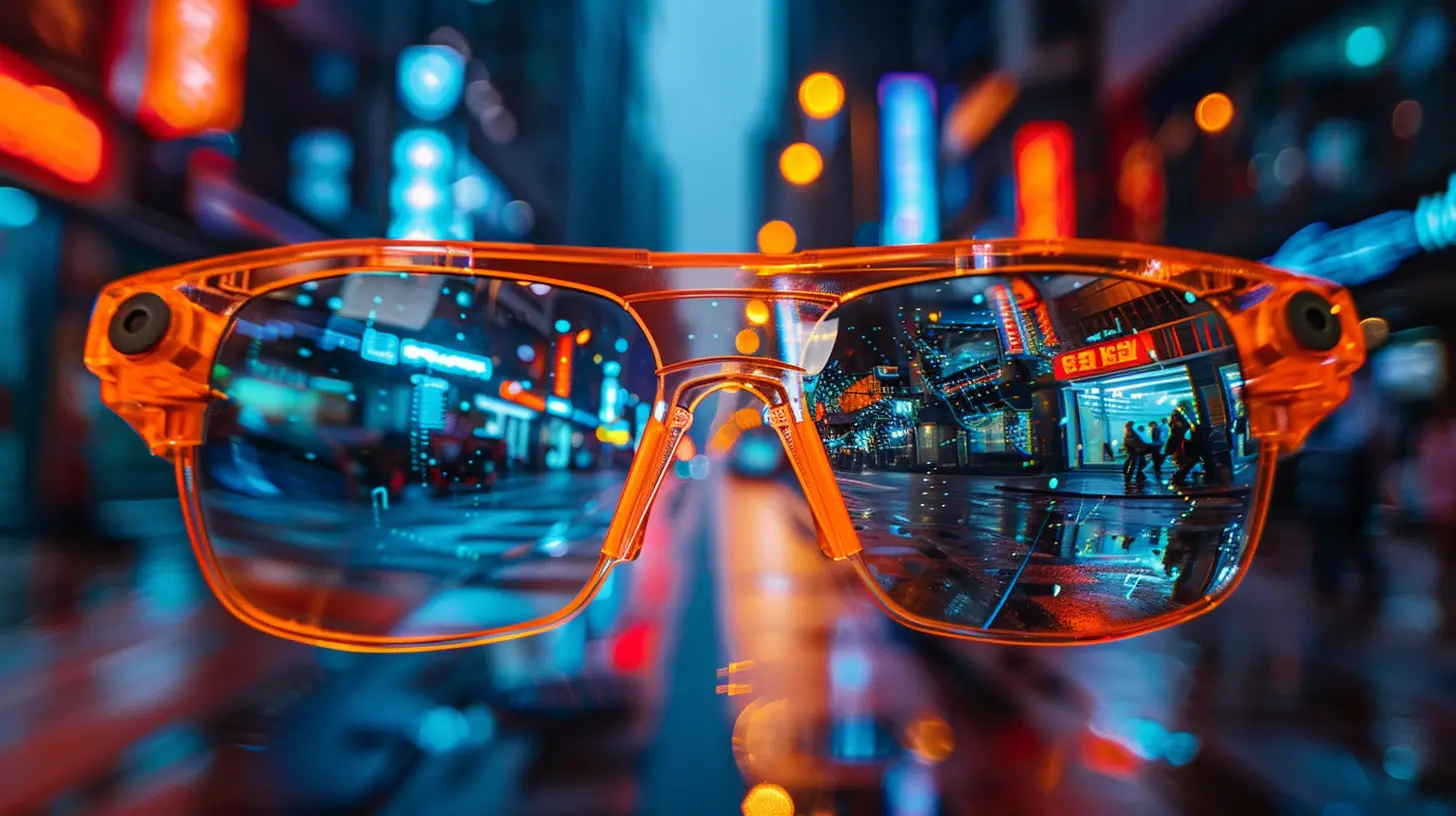
AR Is Already Here (And You Might Not Have Noticed)
You might think AR is some futuristic tech that only gamers or Hollywood studios mess with, but guess what? You’re probably already using it.Remember Snapchat filters or Instagram face effects? That’s AR.
Used Google Lens to identify a plant or translate text in real-time? Yep, that’s AR too.
So, AR isn’t coming—it’s already here, quietly revolutionizing how we interact with technology and each other. And it’s only going to get more awesome from here.
Shaping Social Interactions With AR
Picture this: You're at a party, and instead of awkwardly forgetting names, your AR glasses subtly display the name and shared interests of the person you’re speaking to. Ice-breaker? Instant.AR has the potential to transform how we engage in social settings. Whether it's helping us remember people, understand their mood, or even translate conversations across languages on the fly, AR could make socializing more inclusive and less intimidating.
Breaking Down Social Barriers
Imagine you're traveling abroad and don’t speak the local language. With AR translating conversations in real-time, communication becomes a breeze. It's like having a built-in interpreter in your pocket.And for those who are shy or have social anxiety, AR could offer comfort—like guiding conversation prompts or visual cues to navigate tricky social waters.
Reimagining Education and Learning
Let's talk classrooms. Traditional learning can be kinda plain—textbooks and lectures aren’t exactly the most engaging ways to learn about the solar system or human anatomy.AR flips that on its head.
Learning Through Experience
With AR, students can walk through historical battlefields, explore the human heart, or even simulate complex chemical reactions—all from the classroom.This isn’t just about making things “cool.” It’s about deeper understanding. By experiencing concepts firsthand, students retain more information and stay more engaged. Education becomes immersive, interactive, and undeniably fun.
Personalized Learning Paths
Everyone learns differently. AR enables tailored learning experiences based on individual pacing, comprehension, and interests. Struggling with geometry? Imagine an AR tool that helps you visualize and manipulate 3D shapes right in front of you. That’s next-level learning.Gaming and Entertainment on Steroids
Let’s be honest—most of us were first introduced to AR through games like Pokémon GO. And although that craze may have fizzled out for some, it opened the floodgates.Gaming That Jumps Off the Screen
AR blurs the line between gaming and reality. You won't just play a game—you'll live it. Imagine battling zombies in your backyard or solving a mystery in your own home. AR makes that possible.It redefines what immersive gameplay means. No need for bulky headsets or controllers. Your entire environment becomes your playground.
Movies and Live Performances Get a Glow-Up
AR also has a place in the movie and entertainment world. Live concerts could feature 3D holograms dancing alongside performers. Museums might use AR to animate exhibits, making history feel alive.Say goodbye to passive viewing—say hello to interactive entertainment.
Transforming How We Shop and Browse
Ever bought clothes online only to realize they don’t fit or look nothing like the photos? AR’s about to fix that.Try Before You Buy—Virtually
Retail is being revolutionized with AR-powered “virtual try-ons.” Whether it’s clothes, makeup, or even furniture, you can now use your phone to see how something looks on you or in your home before buying it.Brands like IKEA, Sephora, and Warby Parker are already killing it with AR. You get to interact with products, explore options, and make smarter decisions—all from your couch.
Shopping Becomes an Experience
AR isn’t just about convenience; it’s about enjoyment. Shopping can turn into a fun, gamified experience. Picture a grocery store where your AR glasses show you recipes, discounts, or product info as you walk down the aisles. That’s future-forward retail.Changing the Way We Work
Remote work? Hybrid office setups? AR is going to supercharge workplace communication and collaboration.Smarter Meetings
Forget boring video calls. With AR, co-workers could appear as lifelike holograms sitting across from you. You’ll be able to share and interact with 3D models, diagrams, and presentations like you're in the same room—even if you’re miles apart.Hands-On Training Without The Risk
In industries like healthcare, engineering, or construction, AR can simulate real-world scenarios for training without the dangers of messing up. It’s like a safety net that still delivers hands-on experience.This means faster onboarding, better skills development, and fewer accidents on the job.
Navigation and Travel—Made Simple
Ever tried reading a map while walking in an unfamiliar city? It’s not fun. But AR can transform your phone screen—or even your windshield—into a dynamic guide.Real-Time Navigation
Apps like Google Maps are already testing AR to show you exactly where to go with massive arrows layered over the real world through your phone camera. It feels like your map is physically part of your surroundings.Enhanced Travel Experiences
Visiting a landmark? Point your phone at it, and boom—up pops historical facts, visitor reviews, or even a 3D reconstruction of what it looked like centuries ago. It’s like having a personal tour guide who never gets tired.Healthcare Gets a High-Tech Makeover
Healthcare is probably the last place you'd expect to see augmented reality, but trust me, it’s showing up in powerful ways.Assisting Surgeries
Doctors can use AR to visualize organs, veins, and bones during surgeries, enhancing precision and reducing risks. It’s not sci-fi—it’s surgical accuracy at its finest.Helping Patients Heal
AR is also helping patients—especially in physical therapy. Guided AR exercises can ensure they’re doing moves correctly, while gamification techniques make recovery a whole lot more motivating.Real Estate and Home Design Reimagined
Buying a home is a big deal, and it’s often hard to picture what a space will look like once furnished. AR solves that puzzle.Virtual Home Staging
You can now walk into an empty house and, using AR, see how it’d look with your furniture and style. This isn’t just handy for buyers—it’s a game-changer for real estate agents.Redesigning Made Easy
Want to rearrange your living room but not sure if the new couch will fit? AR apps can show you exactly how your space will look before you lift a finger. Say goodbye to buyer’s remorse.The Future Is Closer Than You Think
AR is not a far-off concept reserved for tech geniuses or Hollywood sets. It's already here, quietly integrating itself into our lives, improving how we work, learn, communicate, shop, and play.Sure, there’s still room to grow. But the direction is clear: AR is making our interactions more intuitive, more immersive, and way more meaningful.
So, What’s Next?
As AR continues to evolve, we’ll likely see smarter glasses, better mobile apps, and more seamless experiences that blur the line between digital and physical. But the heart of it all? Connection.AR isn’t just about flashy visuals or hype—it’s about enhancing human interaction. Making communication easier. Making learning more engaging. Making life more fun.
And that’s something we can all get excited about.
Wrapping It Up
Augmented reality is changing the game, and it's doing it in the most personal way possible—by transforming our everyday interactions. Whether it’s chatting with friends, learning new skills, shopping smarter, or playing games that spill into the streets, AR is creating a world where digital and physical realities blend like never before.And the best part? You don’t need to be a techie to enjoy it.
So get ready—because the future of interaction is not just coming, it’s already knocking on your screen.
all images in this post were generated using AI tools
Category:
Future TechAuthor:

John Peterson
Discussion
rate this article
2 comments
Hattie McNulty
Imagine ordering a pizza and seeing it pop up in your living room before it arrives! Augmented Reality is all set to sprinkle some magic on our daily interactions, making life not just easier, but way more fun! 🍕✨
February 14, 2026 at 1:37 PM
John Peterson
Absolutely! AR has the potential to revolutionize how we experience everyday moments, blending the virtual with the real for added excitement and convenience. 🍕✨
Kylie Martinez
Augmented Reality: finally, a way to see the world with fewer awkward small talk moments! Imagine interacting with a digital dog instead of your neighbor's yappy one. Now that’s a tech upgrade I can get behind!”
January 16, 2026 at 12:46 PM
John Peterson
Absolutely! Augmented reality can redefine social interactions by creating more engaging and personalized experiences, minimizing those awkward moments. Your digital dog concept perfectly illustrates this potential!