How Open Source is Democratizing Machine Learning
20 August 2026
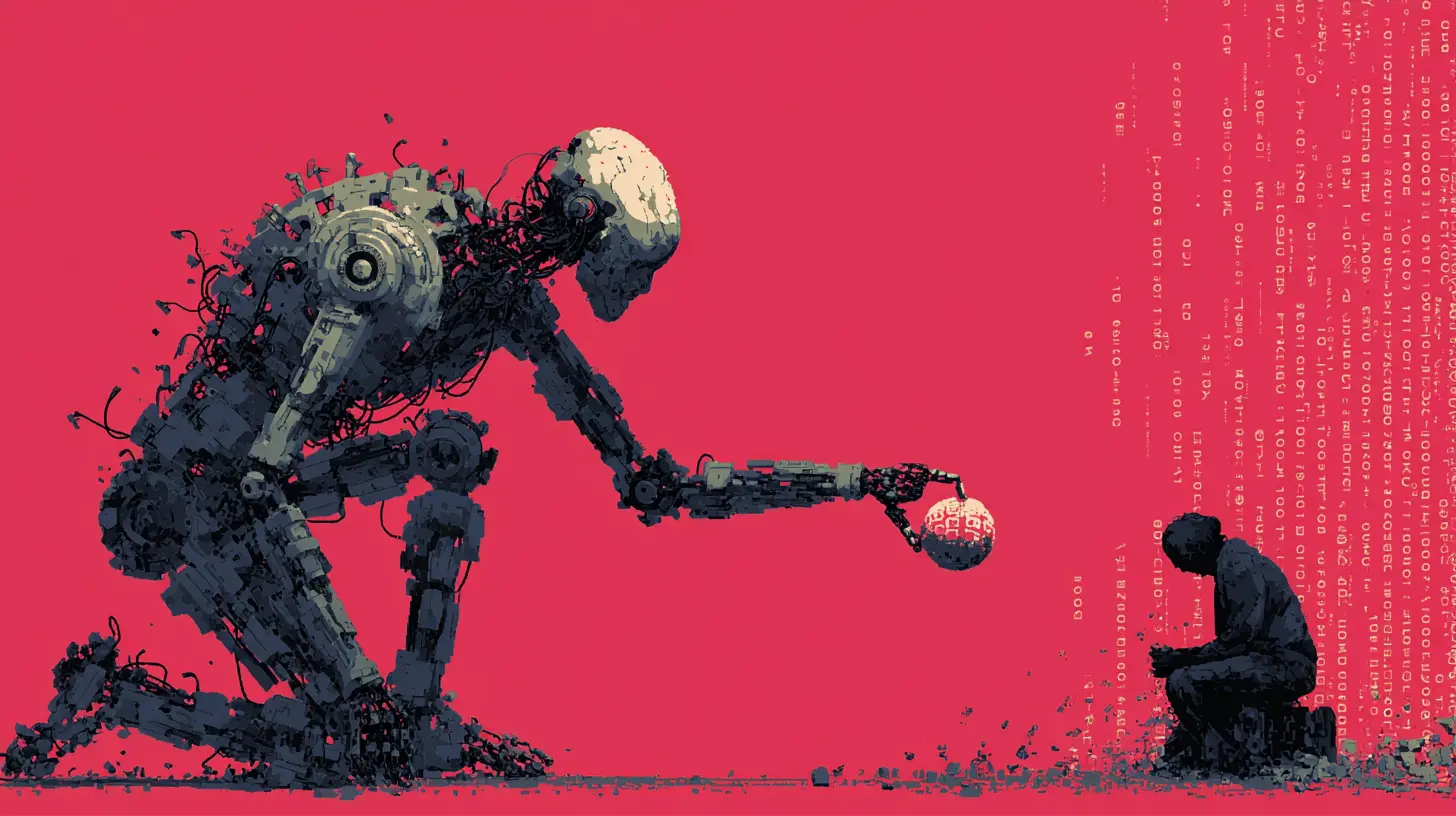
Not long ago, machine learning was a fortress. You needed a PhD in mathematics, a six-figure budget for proprietary software licenses, and access to a university cluster that hummed like a jet engine. The tools were opaque, the datasets were guarded, and the results were often locked inside black boxes that only the original authors could interpret. That world is crumbling, and the wrecking ball is open source.
Democratization in this context does not mean everyone becomes a data scientist overnight. It means the barriers to entry have shifted from "impossible" to "challenging but achievable." It means a solo developer in a garage can now fine-tune a language model that rivals what a Fortune 500 company could build five years ago. It means a biology student can run protein folding predictions without begging for compute credits. It means the gap between "having an idea" and "testing that idea" has narrowed from years to days.
But let's be clear about what open source is doing, what it is not doing, and where the remaining friction lives. Because the story is not all sunshine and pip install. There are real trade-offs, hidden costs, and a few dangerous misconceptions that can derail your project if you buy into the hype without understanding the mechanics.
The Great Unbundling of the ML Stack
The traditional machine learning stack was a monolith. You bought a suite from a vendor, and it came with data ingestion, model training, deployment, monitoring, and a support line that transferred you to someone who read from a script. Open source shattered that monolith into Lego bricks. You now assemble your own stack, and that is both liberating and terrifying.Consider the modern stack. You have PyTorch or TensorFlow for the modeling layer. You have Hugging Face Transformers for pre-trained weights and tokenizers. You have Ray for distributed training. You have MLflow or Weights and Biases for experiment tracking. You have FastAPI for serving. You have Grafana and Prometheus for monitoring. Every single one of those is open source, and every single one is best-in-class at its job. No vendor lock-in. No per-seat licensing fees. No waiting for a feature request to be prioritized by a product manager in another time zone.
The unbundling has a subtle but profound effect. It changes who gets to innovate. In the old model, innovation happened at the vendor level. If you wanted a new algorithm, you waited for the next release. Now, innovation happens at the community level. If someone at a university publishes a new attention mechanism on Monday, there is a good chance it is in a PyTorch nightly build by Thursday. The feedback loop between research and practice is almost instantaneous.
But the unbundling also means you are responsible for integration. The vendor used to guarantee that component A talked to component B. Now you are the glue. That is fine if you have a platform engineer on staff. It is a nightmare if you are a solo practitioner trying to ship a model to production by Friday. The democratization of the pieces does not automatically democratize the assembly.
Pre-trained Weights: The Real Equalizer
The single most important open source development in machine learning is not a framework. It is the widespread distribution of pre-trained model weights. Hugging Face's Model Hub is the prime example. You do not train BERT from scratch. You download it. You do not pre-train Llama 3. You download it and fine-tune it on your specific data.This changes the economics of machine learning in a fundamental way. Training a large language model from scratch costs millions of dollars in compute alone. Fine-tuning that same model on a custom dataset costs tens of dollars on a single GPU. The heavy lifting has been done once, by someone else, and the results are shared openly. This is the true democratization. It is not that everyone can train a model. It is that almost no one needs to.
The practical implication is enormous. A small clinic can fine-tune a medical note summarizer on its own records. A local government can fine-tune a document classifier for public records. A hobbyist can fine-tune a text-to-image model on their own art style. None of these use cases would exist if the starting point were a blank matrix of random weights.
However, pre-trained weights come with baggage. The biases of the original training data are baked in. If you fine-tune a model that was trained on a skewed corpus, you are inheriting that skew. You are also inheriting the model's limitations. For example, Llama models are trained predominantly on English text. Fine-tuning them on a low-resource language will not magically make them fluent in that language. You are polishing a stone that has a specific shape, not sculpting a new one.
Another issue is provenance. Not all open source weights are created equal. Some are released under permissive licenses like Apache 2.0. Others, like some versions of Llama, have a community license that restricts commercial use above a certain scale. You must read the license terms carefully, not just the README. Many a startup has built a prototype on a model, only to discover that their usage exceeded the license threshold and they now face a legal headache.

Fine-Tuning and LoRA: The Practical Sweet Spot
Full fine-tuning of a large model is still expensive. You need to update every weight, which requires storing gradients and optimizer states. For a 70 billion parameter model, that is beyond the reach of most individuals and many small companies. This is where Low-Rank Adaptation, or LoRA, has become a game changer.LoRA freezes the original weights and adds small trainable matrices that capture the changes needed for your specific task. You might only train a few million parameters instead of billions. That fits on a single consumer GPU. The technique works surprisingly well for tasks like style transfer, domain adaptation, and instruction following.
The reason LoRA works is that the new knowledge you want to teach the model is often low-rank in nature. It does not require restructuring the entire network. It is a small correction on top of a robust foundation. This is a beautiful insight, and it is entirely open source. The PEFT library from Hugging Face makes it trivial to apply.
But LoRA is not a magic wand. If your task is fundamentally different from what the base model was trained for, LoRA will not save you. You cannot take a text model, slap a LoRA on it, and expect it to classify images. You also need to be careful with hyperparameters. A LoRA rank that is too small will underfit. A rank that is too large will overfit and may even degrade the base model's performance. There is a sweet spot, and finding it requires experimentation.
The broader lesson is that democratization does not mean "no skill required." It means "skill required, but capital not required." You still need to understand learning rates, validation sets, and overfitting. But you do not need a data center.
The Compute Conundrum: Still a Privilege
I would be lying if I said open source has solved the compute problem. It has not. Training a state-of-the-art model from scratch still requires thousands of GPUs. Even fine-tuning a large model, with or without LoRA, requires a GPU with enough memory. Consumer hardware has improved, but the frontier has moved faster.What open source has done is make compute more accessible through abstraction. Tools like DeepSpeed and FSDP allow you to shard models across multiple GPUs, even if those GPUs are modest. You can rent a single A100 for a few dollars per hour on a cloud provider and fine-tune a model that would have been unthinkable a decade ago. The cost curve has bent, but it has not broken.
The practical advice here is to design your experiments around your compute budget, not the other way around. If you have 8 GB of GPU memory, do not try to fine-tune a 13 billion parameter model. Choose a smaller model, or use quantization and LoRA. If you need a larger model, use a cloud provider and budget for the experiment. Accept that some experiments will simply be out of reach. That is not a failure of open source. It is a physical constraint.
The Rise of Open Datasets
Models are only half the story. The other half is data. The most sophisticated architecture in the world is useless without good training data. Open source has addressed this through initiatives like Common Crawl, which provides petabytes of web text, and specialized datasets like ImageNet, GLUE, and SuperGLUE for benchmarking.More importantly, the community has built tools for dataset curation and cleaning. Datasets like RedPajama and The Pile have attempted to replicate the quality of proprietary training sets. The Allen Institute for AI has released OLMo, an open language model trained on fully open data, with the entire training pipeline documented.
This matters because proprietary models trained on closed data are black boxes. If you do not know what went into the training set, you cannot fully explain the model's behavior. Open datasets allow for reproducibility and auditability. You can trace a model's failure back to a specific data source. You can identify gaps in coverage. You can understand why a model is biased in a particular way.
But open datasets have their own issues. They are often noisy. Common Crawl is full of spam, duplicate content, and machine-generated text. Cleaning it requires significant effort. The Pile includes books, academic papers, and web text, but it also includes content that may be copyrighted. The legal landscape for training on these datasets is still murky. If you are building a commercial product, you need to be careful about what you use.
The best practice is to treat open datasets as a starting point, not a final answer. Filter aggressively. Deduplicate. Remove personally identifiable information. Add your own domain-specific data. The quality of your final model is more dependent on the quality of your curated dataset than on the base model you chose.
Community Governance and the Bazaar Model
Open source machine learning is not just about code. It is about governance. The Linux Foundation model, where a neutral body oversees development, has been replicated in projects like Kubeflow and ONNX. The Apache Software Foundation hosts several ML projects. These governance structures matter because they ensure that no single company can hijack the project for its own benefit.The bazaar model, to use Eric Raymond's famous phrase, has proven remarkably effective for machine learning. Bugs are found and fixed quickly. New ideas are proposed and tested in public. The collective intelligence of thousands of contributors outweighs the intelligence of any single corporate team.
However, the bazaar model has a dark side. It can be chaotic. There is no single person to blame when something breaks. Documentation is often incomplete. Breaking changes happen without warning. The pace of development is so fast that tutorials written six months ago may no longer work.
For a practitioner, this means you need to be comfortable with uncertainty. You cannot rely on stable APIs. You need to pin versions. You need to read release notes. You need to be willing to debug someone else's code at 2 a.m. The community is generous with help, but it is not a support contract.
The Danger of the "Just Use It" Fallacy
The biggest misconception about open source machine learning is that it reduces the need for expertise. It does not. It reduces the need for capital. The expertise requirement has actually increased in some ways because you have more choices to make.A beginner can download a pre-trained model and get decent results in minutes. But getting excellent results requires understanding the model's architecture, the training data, the fine-tuning process, and the evaluation metrics. It requires knowing when to use a transformer versus a convolutional network. It requires knowing how to interpret a loss curve. It requires knowing what "good" looks like for your specific problem.
The democratization of machine learning has lowered the floor, but it has not lowered the ceiling. If anything, it has raised the ceiling because the tools are so powerful that a knowledgeable practitioner can achieve results that were previously impossible.
The practical advice is to invest in fundamentals. Learn the math behind gradient descent. Understand regularization. Learn how to design experiments. The open source ecosystem will provide the tools, but it will not provide the judgment.
Practical Steps for Getting Started
If you want to take advantage of this democratization, here is a pragmatic path.Start with a small, well-understood problem. Do not begin with a grand project like building your own language model. Begin with a classification task or a regression task. Use a pre-trained model from Hugging Face. Fine-tune it on a small dataset. Get a baseline. Then iterate.
Use a framework that abstracts away the low-level details. PyTorch Lightning is excellent for this. It handles the training loop, validation, and checkpointing for you. You focus on the model and the data.
Version everything. Use Git for code. Use DVC or similar tools for data. Use MLflow for experiments. Reproducibility is not optional. If you cannot reproduce your own results, you cannot trust them.
Join the community. Participate in forums, Discord servers, and GitHub discussions. Ask questions. Share your results. The open source ecosystem is built on reciprocity. You will get help, but you are also expected to give help when you can.
Finally, be skeptical of benchmarks. A model that performs well on a public benchmark may not perform well on your data. Always evaluate on your own validation set. Always test in a realistic setting before deploying.
The Future Is Open, But Not Free
The trajectory is clear. Open source will continue to eat the proprietary machine learning stack. More models will be released with open weights. More datasets will be made public. More tools will emerge to lower the barrier further. But "open" does not mean "free." It means "free to use, with responsibilities."You are responsible for understanding the license. You are responsible for evaluating the model's behavior. You are responsible for the consequences of deploying it. The community provides the raw materials, but you provide the craftsmanship.
Democratization is not a passive process. It is an invitation to participate. The tools are in your hands. The question is not whether you can build something. The question is whether you will take the time to build something worth building.
The fortress walls have crumbled. The moat has dried up. The drawbridge is down. Walk through, but bring your own map.
all images in this post were generated using AI tools
Category:
Open Source ProjectsAuthor:

John Peterson
Discussion
rate this article
1 comments
Fable Cox
Open source and machine learning are like peanut butter and jelly-tasty, thrilling, and a great way to stick it to big tech! Let's spread the knowledge and savor the fun!
August 20, 2026 at 11:46 AM
John Peterson
I love that analogy! Open source truly empowers everyone to innovate and learn. Let's keep spreading the word!