How SaaS Is Driving Innovation Across Industries
14 July 2026
There is a quiet revolution happening in how businesses operate, and it is not tied to a single technology like artificial intelligence or blockchain. It is the shift to software delivered as a service, or SaaS. This model has moved far beyond simple productivity tools and email platforms. It is now the engine driving innovation in industries that were once considered slow to change, from manufacturing and healthcare to agriculture and construction. What makes SaaS so powerful is not just the software itself, but the fundamental change in how organizations can experiment, scale, and adapt.
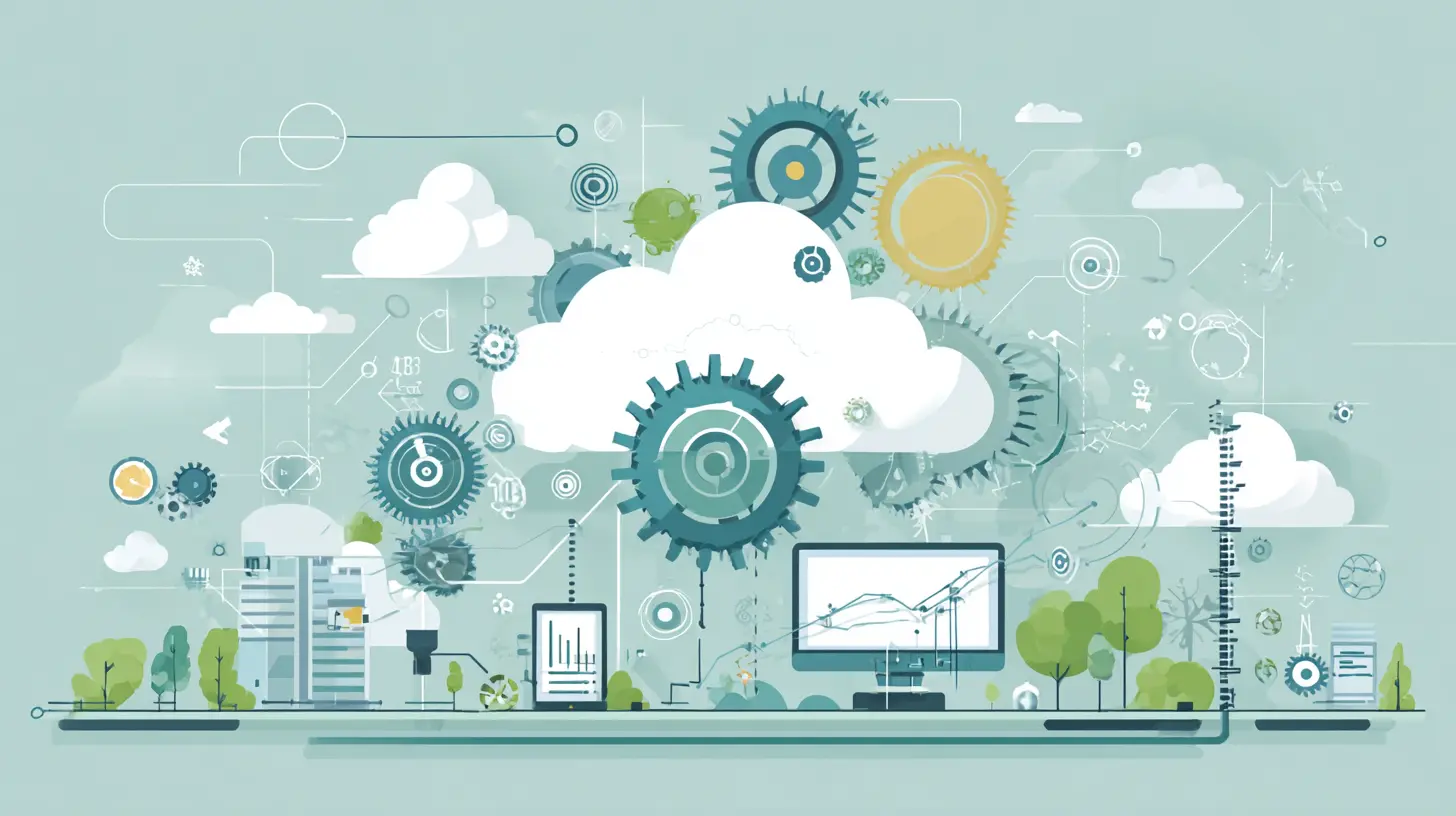
The Core Mechanism: Why SaaS Accelerates Innovation
To understand why SaaS drives innovation, you have to look at the old way of doing things. Before SaaS, buying software meant a capital expenditure. You purchased licenses, installed them on your own servers, and paid for maintenance contracts. If the software did not work as expected, you were stuck with it. Upgrades were expensive and risky. This created a culture of risk aversion. Companies only bought software they were sure would work, and they waited years between upgrades.SaaS changes the economic equation. You pay as you go, usually monthly. The vendor handles updates, security, and infrastructure. This shifts the risk from the buyer to the vendor. If a SaaS tool does not deliver value, you cancel the subscription. This low barrier to entry allows companies to experiment. They can try a new customer relationship management system, a new inventory management tool, or a new analytics platform with almost no upfront cost. The ability to fail cheaply and quickly is the foundation of innovation.
Think of it like renting a workshop versus buying one. If you own the workshop, you are careful about what tools you buy because each one is a big investment. You might stick with a hammer and saw for years. But if you rent the workshop and can swap tools every month, you will try a power drill, a laser cutter, and a 3D printer. You will discover new ways to build things. That is what SaaS does for business.

Breaking Down Silos with Cloud-Native Architecture
One of the most overlooked aspects of SaaS is how it forces better software design. Legacy on-premise software was built to run in isolation. It had its own database, its own user interface, and its own logic. Connecting it to other systems required expensive custom integrations that often broke with updates.Modern SaaS platforms are built with APIs from day one. They expect to talk to other systems. This has a profound effect on innovation because it allows data to flow freely across departments and even across companies. A manufacturer can connect their SaaS-based inventory system directly to a supplier's ordering portal. A hospital can link its patient scheduling software to a cloud-based billing system. When data moves easily, new insights emerge.
Consider the example of a logistics company. In the past, they might have used a standalone dispatch system that did not talk to their accounting software. Dispatchers would manually enter delivery times, and accountants would manually enter the same data for invoicing. This double entry was slow and error-prone. With a SaaS dispatch platform that integrates with a SaaS accounting platform, the data flows automatically. The company can now see in real time which routes are most profitable, which customers pay fastest, and where bottlenecks occur. That insight leads to better route planning, dynamic pricing, and improved customer communication. That is innovation driven by architecture, not by a single feature.
The Continuous Delivery Advantage
Traditional software had release cycles measured in years. A new version came out, you tested it for months, and then deployed it during a weekend maintenance window. If something went wrong, you rolled back. This slow cycle meant that feedback from users took years to reach the software. Innovation was glacial.SaaS vendors deploy updates continuously. Some deploy multiple times per day. This changes the relationship between the user and the software. When a user has a problem or a new idea, they do not have to wait for the next version. They can submit feedback, and the vendor can respond in weeks or even days. This creates a rapid feedback loop that accelerates improvement.
For example, a field service management SaaS platform might notice that technicians are struggling with a particular workflow. The vendor can release a small update that adds a shortcut or a new field. Within a week, every customer has that improvement. In the old model, that improvement would have been bundled into a major release two years later, if it was prioritized at all. This continuous delivery model means that the software is always getting better, and the innovation happens incrementally but constantly.

Industry-Specific Transformations
Healthcare and the End of Paper
Healthcare is an industry where innovation has historically been slow due to regulation, privacy concerns, and the complexity of patient care. SaaS is driving change here in a way that legacy systems never could. Cloud-based electronic health records (EHR) systems have moved patient data out of paper charts and into accessible digital formats. But the real innovation is in the layers built on top.Telemedicine platforms, which are essentially SaaS applications, have made remote consultations possible. This was not just a convenience during the pandemic. It is a fundamental shift in how care is delivered. Patients in rural areas can now see specialists without traveling for hours. Follow-up appointments that used to require taking time off work can happen during a lunch break. The innovation is not in the video call itself, but in the integration with scheduling, billing, and prescription systems that a SaaS platform enables.
Another example is in medical research. SaaS-based clinical trial management systems allow researchers at different hospitals to share data securely and in real time. This speeds up the process of drug discovery and allows for more diverse patient populations in trials. The old model of collecting paper forms and mailing them to a central data entry office is being replaced by cloud databases that update instantly. This reduces errors and accelerates the timeline from trial to treatment.
Manufacturing and the Rise of the Digital Twin
Manufacturing has traditionally been a hardware-heavy industry. Innovation meant building a better machine. SaaS is changing that by adding a software layer to physical processes. The concept of the digital twin, a virtual replica of a physical asset, is a perfect example. A factory can use a SaaS platform to model its production line, simulate changes, and predict outcomes before making any physical modifications.This is not just a theoretical exercise. A plant manager can use a SaaS simulation tool to test what would happen if they moved a conveyor belt or changed the speed of a robot. The software runs the simulation based on real data from sensors, and the manager can see the impact on throughput, energy consumption, and wear and tear. They can make a decision with confidence, knowing that the simulation is accurate. This reduces the risk of costly mistakes and allows for rapid experimentation.
SaaS also enables predictive maintenance. Instead of fixing a machine after it breaks, sensors feed data to a cloud platform that analyzes vibration, temperature, and usage patterns. The platform predicts when a part is likely to fail and schedules maintenance before the breakdown occurs. This is not a new idea, but SaaS makes it accessible to smaller manufacturers who cannot afford the expensive on-premise systems that large corporations use. The subscription model means that a mid-sized factory can get the same predictive capabilities as a multinational conglomerate.
Agriculture and Data-Driven Farming
Agriculture might seem like an unlikely candidate for SaaS innovation, but it is one of the most transformed industries. Modern farming is heavily reliant on data, and SaaS platforms are the delivery mechanism. Crop management software allows farmers to track planting, irrigation, fertilization, and harvesting in a single system. The software integrates with weather data, soil sensors, and satellite imagery to provide recommendations.A farmer can log into a SaaS dashboard and see which parts of their field need more water, which areas are showing signs of disease, and when the optimal harvest window will be. This is not just a convenience. It directly impacts yield and profitability. In the past, farmers relied on intuition and experience. Those are still valuable, but SaaS adds a layer of precision that was not possible before.
The innovation extends to the supply chain. SaaS platforms connect farmers directly with buyers, bypassing traditional middlemen. A farmer can list their crop, negotiate a price, and arrange shipping through a single platform. This reduces waste and increases profit margins. The data from these transactions also helps farmers make better decisions for the next season. They can see which crops were most profitable, which buyers paid the fastest, and which logistics providers were most reliable.
Common Misconceptions and Pitfalls
Despite its advantages, SaaS is not a magic bullet. There are common mistakes that organizations make when adopting SaaS, and these can actually stifle innovation instead of encouraging it.The Integration Illusion
One misconception is that SaaS tools will automatically work together because they are in the cloud. This is false. While many SaaS platforms have APIs, not all APIs are created equal. Some are well-documented and stable. Others are poorly designed and change frequently, breaking integrations without warning. Companies often buy multiple SaaS tools without a clear integration strategy, ending up with a new set of silos that are just as bad as the old ones.The best practice is to choose a platform that serves as a hub, or to use a dedicated integration platform as a service (iPaaS) to connect systems. Before buying any SaaS tool, ask the vendor for their API documentation and check how often they change it. Look for platforms that support standard protocols like REST and have a track record of backward compatibility.
The Customization Trap
Another mistake is assuming that SaaS can be customized to fit any workflow. Most SaaS products are designed to be configurable, not customizable. You can change settings, add fields, and adjust permissions, but you cannot rewrite the core logic. Companies that try to force a SaaS tool to match their exact existing process often end up with a system that is hard to maintain and breaks with every update.The smarter approach is to adapt your process to the software, not the other way around. SaaS vendors have designed their workflows based on best practices from thousands of customers. If the software does something differently than you do it, consider whether your way is actually better. Often, it is just the way you have always done it. Embracing the SaaS workflow can be an innovation in itself, forcing you to reevaluate processes that may be outdated.
The Security Oversimplification
There is a persistent myth that cloud software is inherently less secure than on-premise software. The opposite is often true. SaaS vendors have dedicated security teams that focus on nothing but protecting their infrastructure. They have the resources to patch vulnerabilities quickly, run penetration tests, and comply with industry standards like SOC 2 and HIPAA. Most small and medium businesses cannot afford that level of security in-house.However, the security responsibility is shared. The vendor secures the platform, but the customer is responsible for securing their own access. Weak passwords, shared accounts, and lack of multi-factor authentication are the most common causes of SaaS breaches. Companies must invest in proper identity and access management, even if the software is in the cloud. Neglecting this is a mistake that can undo all the benefits of SaaS.
When SaaS Is Not the Right Choice
For all its strengths, SaaS is not always the best option. There are scenarios where traditional on-premise software or custom development makes more sense. Recognizing these situations is a sign of expertise.Extreme Latency Sensitivity
If your application requires sub-millisecond response times, SaaS might not work. Think of high-frequency trading systems, real-time industrial control, or certain types of medical devices. The round trip to a cloud server, even a fast one, introduces latency that can be unacceptable. In these cases, edge computing or on-premise software is necessary. The innovation here is in hybrid architectures, where a local system handles real-time processing and a SaaS platform handles analytics and reporting.Data Residency and Sovereignty
Some industries are subject to regulations that require data to stay within specific geographic boundaries. While many SaaS vendors offer regional hosting, not all do. If your data must never leave a particular country or state, you need to verify that the vendor can guarantee this in their service agreement. Some organizations choose to run a private cloud instance of the software, which is essentially on-premise but managed by the vendor. This is a hybrid model that offers some of the benefits of SaaS while addressing compliance concerns.Long-Term Cost at Scale
SaaS is cost-effective for small and medium deployments, but at very large scale, the subscription fees can add up to more than the cost of owning the software. If you have tens of thousands of users, the per-user monthly fee can become a significant expense. In these cases, negotiating a volume discount or considering a self-hosted alternative may be more economical. The trade-off is that you lose the continuous updates and the vendor's infrastructure management. It is a decision that requires careful financial modeling.Best Practices for Adopting SaaS as an Innovation Driver
To truly use SaaS as a tool for innovation, organizations need to think beyond the purchase decision. It is about culture and process as much as technology.Start with a Problem, Not a Tool
The most common failure is buying a SaaS product because it looks interesting, without a clear problem to solve. Innovation for its own sake is wasteful. Instead, identify a specific bottleneck, inefficiency, or missed opportunity in your business. Then look for a SaaS tool that addresses that specific issue. The innovation comes from solving the problem in a new way, not from having the software.Build a Culture of Experimentation
Encourage teams to try new SaaS tools on a small scale. Set aside a budget for experiments that are allowed to fail. If a tool does not work, cancel it and move on. If it works, scale it up. This requires leadership that is comfortable with uncertainty and does not punish failure. The companies that innovate fastest with SaaS are the ones where employees feel empowered to test new ideas without fear of reprisal.Invest in Integration Early
Do not wait until you have ten disconnected SaaS tools to think about integration. Plan your architecture from the start. Choose a set of platforms that are known to work well together. Use an integration platform if necessary. Treat your data as a strategic asset, not a byproduct of using software. The real value of SaaS is not in any single tool, but in the combined intelligence that comes from connecting them.Negotiate for Flexibility
When signing up for a SaaS product, pay attention to the contract terms. Look for month-to-month billing or short-term commitments, especially for experimental projects. Avoid long-term contracts that lock you into a tool that may not meet your needs. Good vendors will offer flexible terms because they are confident their product will keep you subscribed. If a vendor insists on a one-year commitment with no way out, that is a red flag.
The Future: SaaS as a Platform for Ecosystem Innovation
The next phase of SaaS innovation is not about individual tools, but about ecosystems. The most successful SaaS companies are not just selling software. They are building platforms that other companies can build on. This is the marketplace model, where a core SaaS platform allows third-party developers to create add-ons, extensions, and integrations.Think of a customer support SaaS platform that allows developers to create custom widgets for chat, analytics, and automation. The core platform handles the heavy lifting of user management, security, and data storage. The third-party developers focus on specialized features. This creates a virtuous cycle. More developers attract more customers. More customers attract more developers. The innovation happens at an exponential rate because thousands of minds are contributing to the ecosystem.
For businesses, this means that the choice of a SaaS platform is not just about what it does today, but about what it can become. A platform with a vibrant ecosystem will offer more capabilities over time without you having to switch vendors. It is like choosing a smartphone operating system. You are not just buying a phone. You are buying access to an app store. The same logic applies to enterprise SaaS.
Industries that have not yet embraced SaaS will be forced to do so, not because it is trendy, but because the economics are undeniable. The cost of experimentation is lower, the speed of improvement is faster, and the potential for cross-industry innovation is greater. The question is not whether SaaS will drive innovation, but whether your organization will be ready to take advantage of it.
all images in this post were generated using AI tools
Category:
Saas ToolsAuthor:

John Peterson
Discussion
rate this article
1 comments
Mason Pacheco
This article beautifully highlights how SaaS is transforming industries by fostering innovation. It's inspiring to see how flexible solutions empower businesses to adapt and grow. The potential for creativity and efficiency is limitless, making it an exciting time for companies to embrace these technologies. Great insights shared here!
July 14, 2026 at 3:00 AM
John Peterson
Thank you for your kind words! I'm glad you found the insights on SaaS and its impact on innovation inspiring. It's an exciting time indeed.