Hyperloop: Redefining High-Speed Transportation
1 February 2026
Imagine zooming between cities at speeds faster than airplanes—all while staying on the ground. Sounds like something out of a sci-fi movie, right? Well, it’s not. It’s real, it’s happening, and it’s called the Hyperloop.
We’re standing right at the edge of a transportation revolution, and the Hyperloop is the shiny, futuristic bullet leading the charge. With all the buzz around high-speed trains, electric cars, and flying taxis, the Hyperloop stands out as a game-changer.
So buckle up (or should I say strap yourself in a vacuum tube?) because we’re diving deep into how the Hyperloop is redefining high-speed travel as we know it.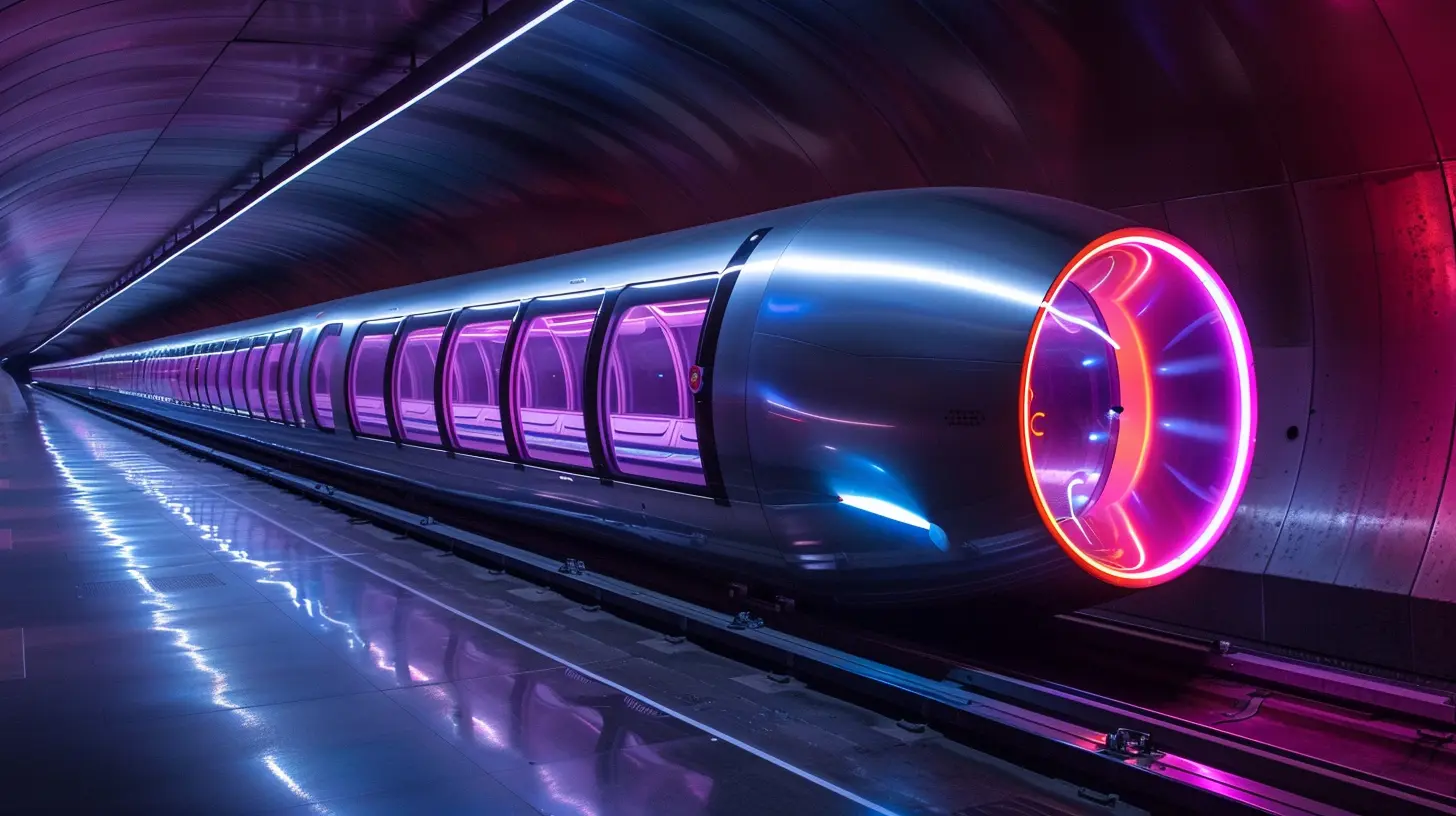
🚄 What Exactly Is the Hyperloop?
At its core, the Hyperloop is a new mode of transportation that uses magnetic levitation and vacuum tubes to move pods at breakneck speeds—close to 760 mph (1,220 km/h). That’s faster than a jetliner, and way more energy-efficient.Here’s how it works:
- A capsule (or pod) carrying passengers or cargo is placed inside a low-pressure tube
- Air resistance and friction are nearly eliminated
- Magnetic levitation (maglev) technology lifts and propels the pod
- The entire system is powered by renewable energy (like solar panels on the tube itself)
The result? A nearly silent, super-fast transport system that could take you from Los Angeles to San Francisco in just 35 minutes.
Mind-blowing, right?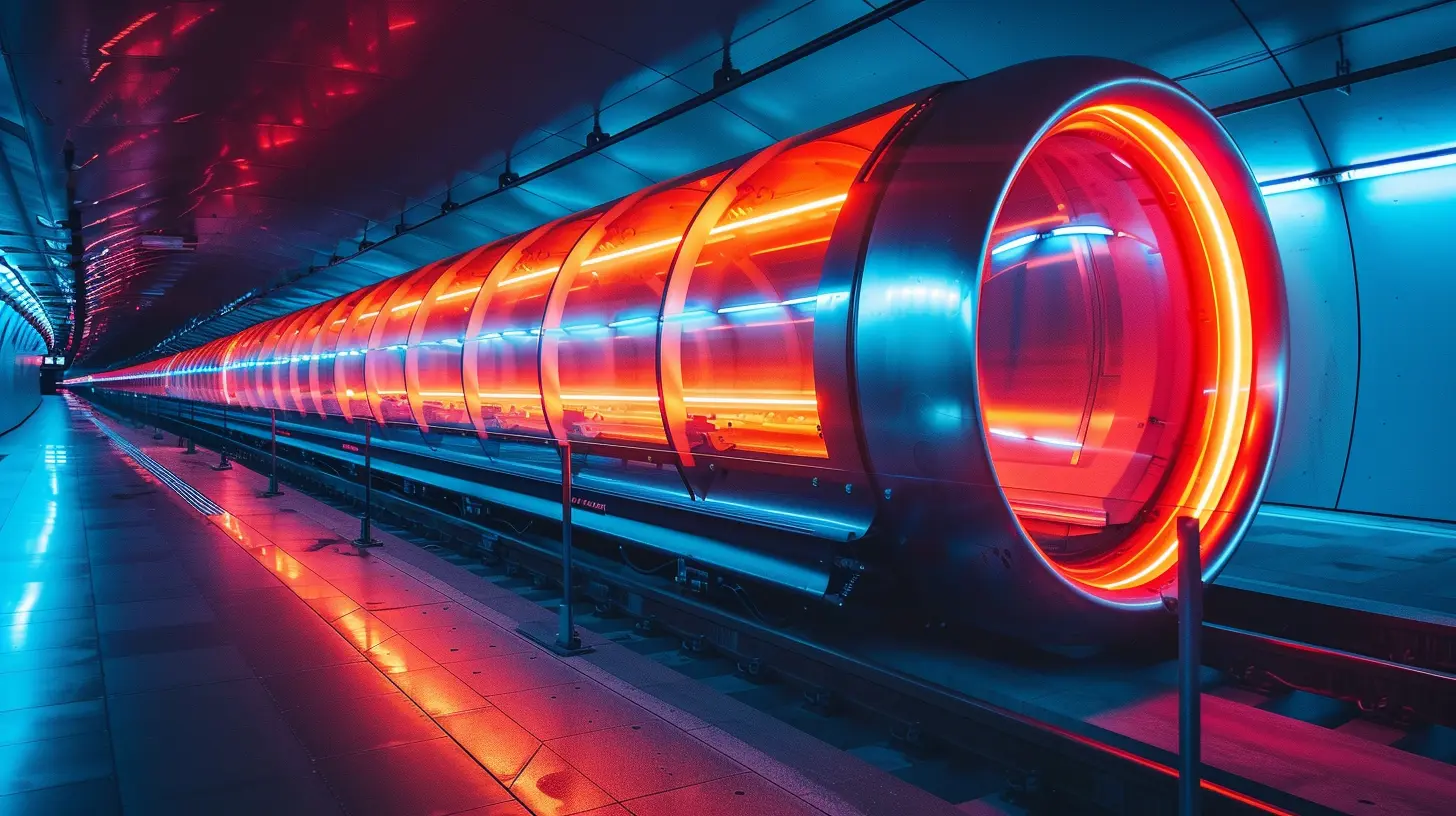
🧠 Where Did the Idea Come From?
The concept of the Hyperloop isn’t exactly new. It’s a modern twist on ideas from the 1800s, believe it or not. But it was Elon Musk—the tech billionaire behind Tesla and SpaceX—who brought the idea back to life in 2013. He released a white paper outlining the feasibility of the Hyperloop and opened the idea to developers worldwide.And boy, did the tech world take the bait.
Now, several companies are racing to make it a reality. Virgin Hyperloop, Hyperloop TT, and Elon Musk’s own Boring Company are leading the charge. Each with their own approach but one shared vision—to shrink the world with ultra-fast, sustainable travel.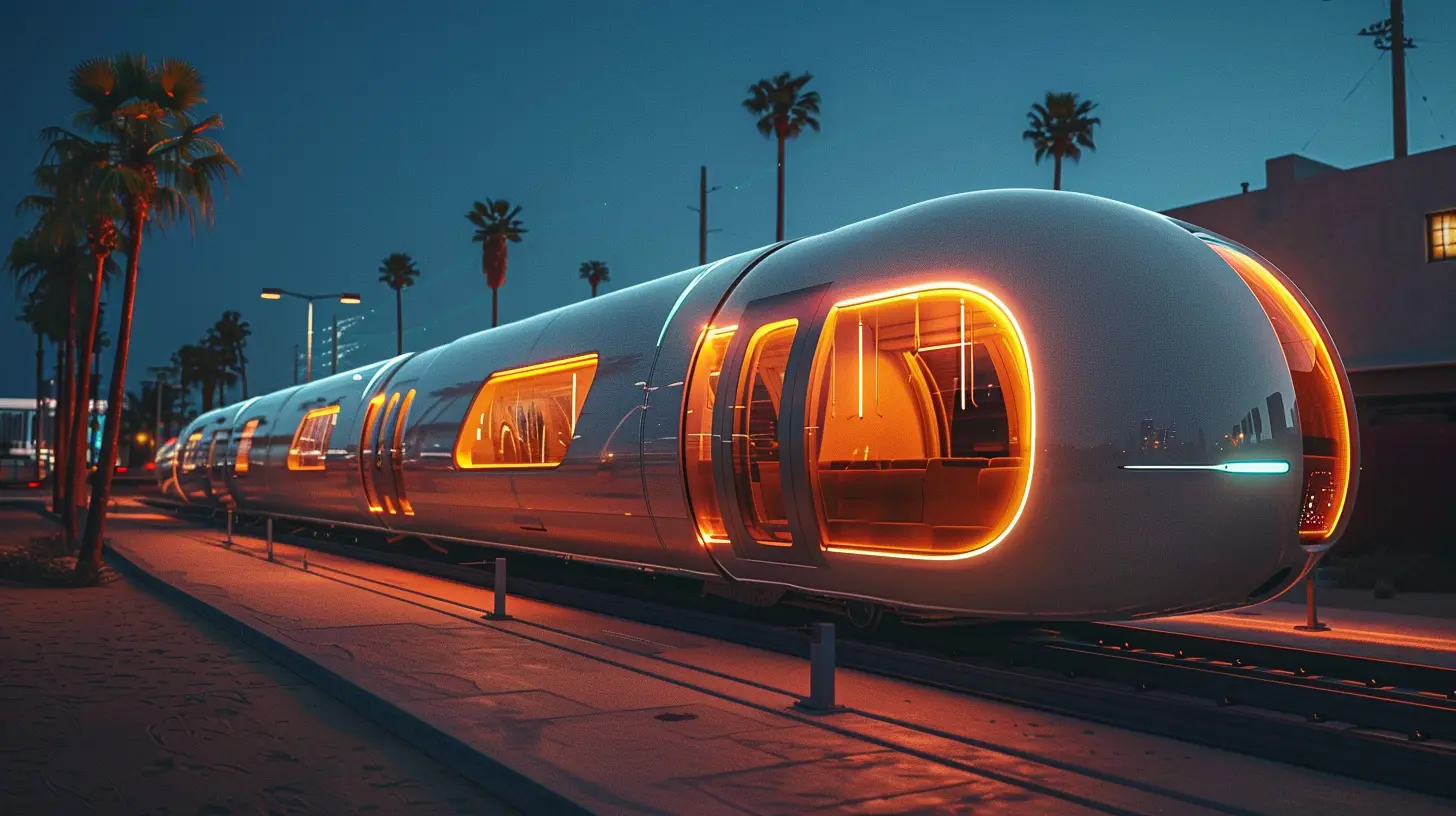
🧪 The Science Behind the Speed
So how does the Hyperloop actually move so fast? Great question. Let’s break it down in simple terms.1. Low Pressure = Low Drag
The inside of the Hyperloop tube has very little air—kind of like being on top of Mount Everest. Having less air inside means there's less resistance, so the pod can move really fast without needing a ton of energy.2. Magnetic Levitation (Maglev)
Instead of wheels, the Hyperloop pods float above the track using magnetic fields. No touching means no friction. And no friction means faster speeds and less wear and tear.3. Linear Electric Motors
Forget engines and fuel. The pods are propelled using linear electric motors along the track. It’s direct, efficient, and super quiet.Think of it like an air hockey table combined with a bullet train, all inside a giant vacuum tube. That’s the Hyperloop.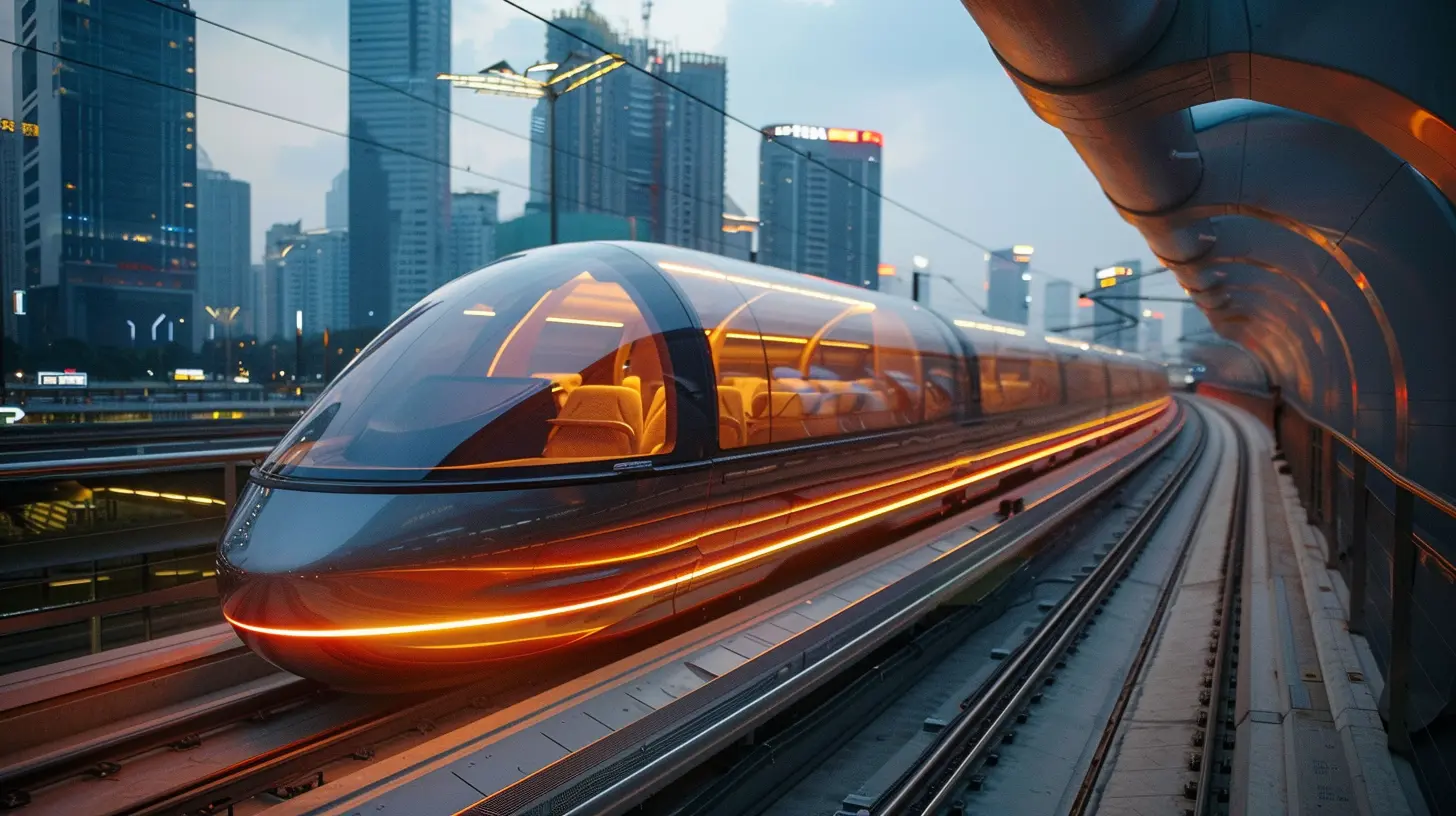
🌍 Why Do We Even Need the Hyperloop?
Now you might be wondering, “Do we really need another transportation method?”Well, yes. Here’s why.
🕑 1. It Saves Time
Time is money, and the Hyperloop can cut travel time drastically. What takes hours by plane or car could take mere minutes.🌱 2. It’s Eco-Friendly
Hyperloop systems are designed to be energy-positive. That means they could generate more energy than they use—especially if solar panels line the tubes.💵 3. It’s Cost-Effective (Eventually)
Despite the high upfront costs (we’re talking billions), the long-term operational costs could be much lower than trains or planes.🚦 4. Less Congestion
With growing urban populations, our current infrastructure is stretched thin. Hyperloop can take pressure off highways and airports.All that sounds pretty awesome, right?
🌟 The Bold Promises of Hyperloop
The Hyperloop isn’t just a fast train—it promises to change the way we live, work, and move.Imagine:
- Living in one city and commuting to another hours away—daily.
- Shipping cargo ultra-fast across continents.
- Reducing carbon emissions massively.
It’s not just transportation; it’s transformation.
🚧 The Roadblocks Ahead
Of course, no shiny new technology comes without a pile of challenges. Let’s not sugarcoat it—there are a few big hurdles to clear.🏗 Infrastructure Costs
Building hundreds of miles of vacuum tubes isn’t exactly cheap. The costs could run into tens of billions of dollars.📜 Regulatory Nightmares
Governments aren’t exactly known for being fast-moving. Getting approval for new transportation systems? That's a bureaucratic maze.👷 Safety Concerns
People in a pressurized pod hurtling at 700+ mph? Understandably, safety is a massive concern. From pod crash scenarios to evacuation systems, everything needs to be tested and proven.🌍 Environmental Impact
Although it's cleaner in operation, building such a massive infrastructure project is bound to have some environmental footprint.Despite all of this, progress is being made.
🏁 Hyperloop Projects Around the World
Alright, let’s get specific. Who’s doing what and where?🇺🇸 United States
Virgin Hyperloop tested its first passenger ride in 2020 at its test site in Nevada. Elon Musk’s Boring Company is also pushing forward with underground tunnel projects, starting with Las Vegas.🇮🇳 India
India might be one of the first countries to get a real Hyperloop route. A proposed line between Mumbai and Pune could slash the travel time from three hours to just 25 minutes.🇦🇪 United Arab Emirates
The UAE, always eager for futuristic tech, is exploring routes between Abu Dhabi and Dubai that could take as little as 12 minutes.🇪🇺 Europe
Countries like France, Spain, and Poland have started partnerships with Hyperloop tech companies to explore feasibility and future routes.🔮 What’s Next for Hyperloop?
We’re not there just yet, but we’re getting close. According to most experts, commercial Hyperloop systems might start to roll out by the early 2030s—if we’re lucky and everything goes smoothly.And when that happens? Our travel habits, job opportunities, supply chains, and even real estate markets could shift dramatically.
Imagine a world where you could live in the countryside and work in the city without ever worrying about a long commute. That's not just convenience—that's quality of life.
🤔 Will the Hyperloop Replace Air Travel?
Good question. The answer is… maybe.For short to medium distances (let’s say under 500 miles), the Hyperloop could easily outpace air travel. It’s faster, greener, and simpler—no long security lines or runway delays.
But airplanes still rule the skies for intercontinental trips, at least for now. Over time, though, if Hyperloop systems expand and connect across continents…who knows?
Don’t bet against innovation.
💡 Final Thoughts
The Hyperloop is more than just a fast pod in a tube. It’s a bold vision of what transportation could look like if we threw out the rulebook and aimed for the sky—or rather, the vacuum.It’s going to take time. It’s going to take money. And yeah, there’ll be setbacks. But history has shown us time and again: when humanity dares to push past "what is" toward "what could be," amazing things happen.
The Hyperloop might just be the next great leap forward in getting us from Point A to Point B—and doing it in record time.
So keep your eyes on the tube. Because the future? It’s coming fast.
all images in this post were generated using AI tools
Category:
Future TechAuthor:

John Peterson
Discussion
rate this article
2 comments
Sage Reynolds
Promising innovation for future travel efficiency.
March 8, 2026 at 12:42 PM
John Peterson
Thanks for your thoughts! We're excited about how hyperloop can change travel.
Kennedy Fuller
Great insights on the Hyperloop! It's exciting to see how this innovative technology could transform transportation and reduce travel times significantly.
February 7, 2026 at 3:39 AM
John Peterson
Thank you! I'm glad you found the insights exciting. The Hyperloop truly has the potential to revolutionize how we travel.