Security Features to Look for in Future Programming Languages
24 September 2026
Programming languages have always evolved to solve the problems developers face. Early languages focused on readability. Later ones prioritized performance, portability, and developer productivity. Security, by contrast, was often bolted on after the fact through libraries, linters, and runtime patches. That approach has limits, and the cost of those limits keeps climbing.
The next generation of languages will be judged partly on how well they handle security at the language level. Not as an add-on framework, but as a core design property. This article breaks down the specific features worth demanding from future languages, why they matter, when they help, and where they can backfire.
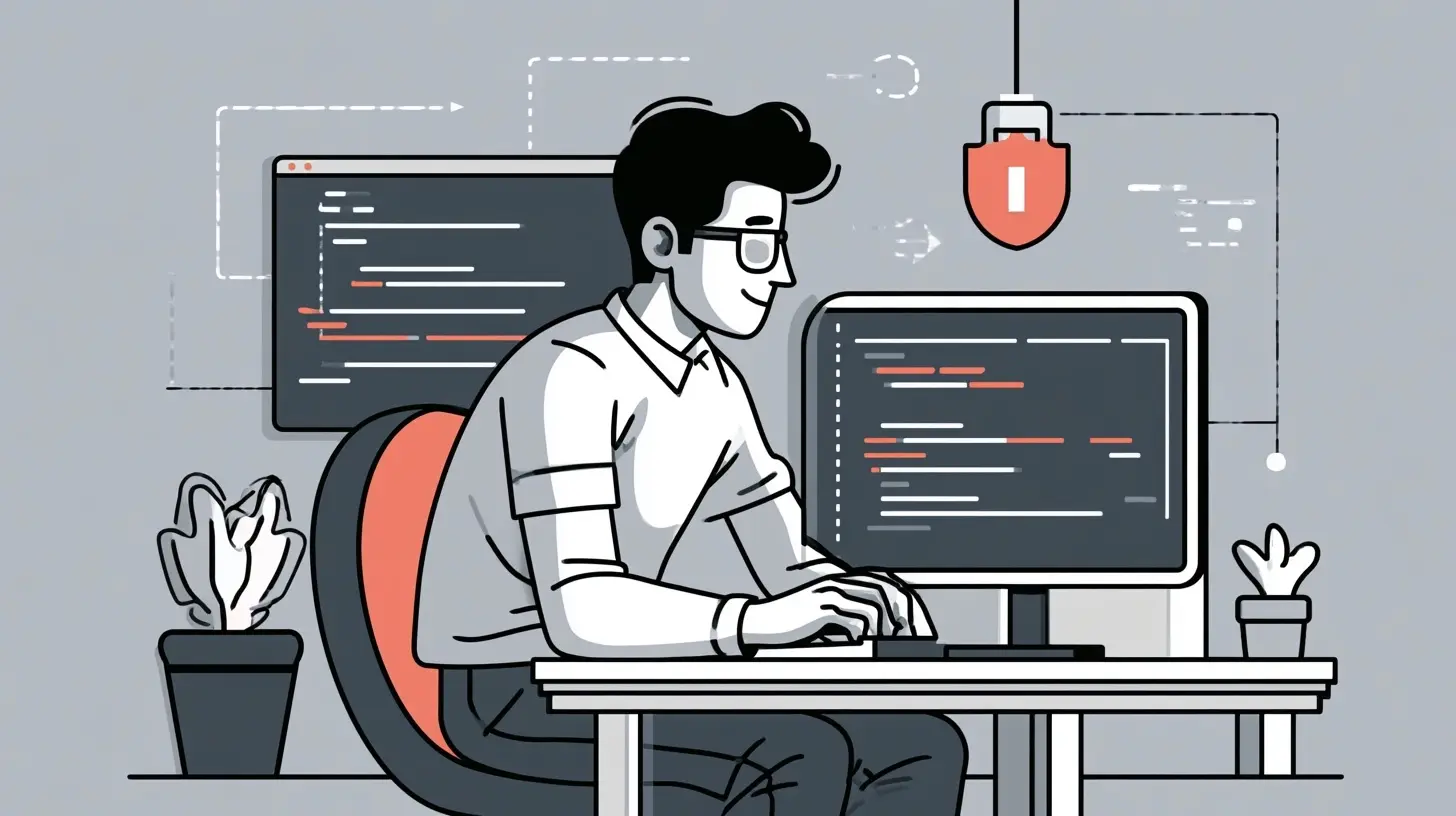
Why Language-Level Security Matters
Most security bugs fall into a small number of categories: memory errors, injection flaws, race conditions, improper input handling, and logic errors around authentication or authorization. Many of these are preventable through language design rather than developer discipline.Consider buffer overflows. They have caused some of the most damaging vulnerabilities in software history. Languages like Rust address this by enforcing memory safety at compile time. That shift alone eliminates entire classes of bugs. The lesson is simple: if the language makes an unsafe operation impossible or visible, developers stop shipping that bug.
But security features are not free. They introduce complexity, restrict expressiveness, and sometimes hurt performance. A future language worth adopting must balance these trade-offs deliberately rather than promising security as a marketing slogan.

Memory Safety Without Garbage Collection
Memory safety remains the foundation. Use-after-free, double-free, and out-of-bounds access are still common in C and C++ codebases. Future languages should offer memory safety by default, not as an opt-in mode.Rust demonstrates one path: ownership and borrowing rules checked at compile time. No garbage collector, no runtime overhead, and no manual free calls. The trade-off is a steeper learning curve and stricter compiler errors. For systems programming, that trade is often worth it.
Other approaches exist. Reference counting with cycle detection, region-based memory management, and linear types all provide alternatives. Each has different performance profiles and ergonomic costs. A future language should let developers choose the memory model per module or component when reasonable, while keeping safe defaults.
What to watch for: does the language allow unsafe escape hatches? If so, how are they isolated, audited, and documented? A language that hides its unsafe blocks inside standard libraries without clear boundaries shifts risk rather than removing it.

Strong, Expressive Type Systems
Types are a security feature. A good type system catches errors before runtime, documents intent, and prevents entire categories of misuse.Future languages should support:
- Algebraic data types for modeling states precisely.
- Dependent types or refinement types for encoding invariants like "this string is a valid email" or "this integer is positive."
- Linear and affine types for tracking resource usage, which helps with file handles, locks, and network connections.
- Effect systems that make side effects explicit, so a function that writes to disk cannot be called from a context that expects purity.
Why does this matter for security? Because many vulnerabilities come from invalid states that the type system could have rejected. SQL injection, for example, often stems from mixing user input with query strings. A language with a proper query type that distinguishes raw strings from validated queries can prevent that at compile time.
The catch: overly strict type systems frustrate developers, and escape hatches get abused. The best designs offer gradual typing or opt-in strictness, so teams can tighten rules as their codebase matures.

Capability-Based Security and Least Privilege
Most languages today give code access to whatever the process can access. If a function can read a file, it can read any file the user can read. That violates the principle of least privilege.Capability-based languages flip this model. Instead of asking "who are you," they ask "what can you access." A function receives explicit capabilities, such as a handle to a specific file or a scoped network connection. Without the capability, the operation is impossible.
This design shows up in research languages and in some production systems. It pairs well with sandboxing and is especially valuable for plugin architectures, multi-tenant services, and untrusted code execution.
When should you use it? When running third-party code, when building extensible platforms, or when compliance requires strict isolation. When should you not? In small, trusted codebases, capability plumbing can add boilerplate without much benefit. The overhead is real, and teams should weigh it against actual threat models.
Built-In Taint Tracking and Data Flow Analysis
Taint tracking follows data from sources to sinks. If untrusted input reaches a dangerous operation without sanitization, the language flags it.Today this is mostly done by external tools. Future languages could integrate taint tracking into the compiler or runtime. Imagine a language where marking a variable as "user input" automatically propagates that label through every operation, and where passing tainted data to a SQL executor or HTML renderer triggers a compile error unless you sanitize it.
This is powerful, but it is also noisy. False positives are common, and over-tainting can make code unreadable. A well-designed language would allow taint labels to be refined, dropped after validation, and scoped to specific modules.
Practical advice: if a language offers taint tracking, start with high-value sinks like database queries, shell commands, and HTML output. Expand coverage gradually.
Safe Concurrency and Race-Free Primitives
Race conditions are security bugs. They cause data corruption, privilege escalation, and unpredictable behavior under load.Future languages should make concurrent code safe by default. Options include:
- Actor models with isolated state and message passing.
- Structured concurrency that ties task lifetimes to scopes.
- Data-race-free type systems that prevent shared mutable state without synchronization.
Rust's Send and Sync traits are a good example. They make thread safety a compile-time property. Go's channels and goroutines offer a different model, easier to learn but easier to misuse.
The trade-off is between safety and flexibility. A language that forbids all shared mutable state is safe but sometimes slow or awkward. A language that allows it freely is fast but risky. The best designs provide safe defaults with clearly marked unsafe paths.
Secure Defaults and Explicit Opt-Outs
Secure defaults mean the language does the safe thing unless you say otherwise. Examples include:- Encryption libraries that require explicit configuration to weaken.
- Random number generators that default to cryptographic quality.
- File permissions that start restrictive.
- Serialization that refuses to execute code by default.
The opposite pattern, where unsafe behavior is the default and safety requires extra work, is a known source of vulnerabilities. Future languages should flip that.
But defaults are not enough. Developers need clear, well-documented ways to opt out when necessary. Hidden or obscure escape hatches lead to copy-paste workarounds that spread risk.
Formal Verification and Contract Support
Some languages support contracts: preconditions, postconditions, and invariants checked at runtime or proven at compile time. Others go further with formal verification tools that mathematically prove properties of code.These features are valuable in high-assurance domains like aerospace, medical devices, and cryptography. They are less practical for a typical web application where requirements change weekly and the cost of proof outweighs the benefit.
A future language should offer tiered verification. Lightweight contracts for everyday code. Full verification for critical modules. The key is making the transition between tiers smooth so teams can adopt verification incrementally.
Supply Chain and Dependency Security
Modern software is mostly dependencies. A language's package manager is a security surface. Future languages should treat it that way.Features worth demanding:
- Cryptographic signing of packages by default.
- Reproducible builds so binaries match source.
- Transparent dependency trees with no hidden transitive surprises.
- Built-in vulnerability scanning tied to the compiler or build tool.
- Capability restrictions on build scripts, which are a common attack vector.
Today, many ecosystems rely on third-party tools for this. Integrating it into the language toolchain reduces the chance that teams skip it.
Auditing, Logging, and Observability
Security is not only about preventing attacks. It is also about detecting them. A language can help by making audit logging a first-class concern.Imagine a language where security-relevant events, such as authentication, authorization decisions, and data access, can be annotated and automatically logged with consistent structure. This reduces the chance that critical events go unrecorded.
The risk is performance overhead and log noise. A good design would allow logging to be compiled out in performance-critical paths while retaining it in sensitive ones.
Interoperability With Existing Systems
No new language exists in a vacuum. It must call C libraries, talk to databases, and integrate with web frameworks. Every boundary is a place where safety guarantees can leak.Future languages should provide safe foreign function interfaces. That means:
- Explicit marshalling with type checks.
- Clear documentation of which guarantees hold across the boundary.
- Sandboxing for untrusted native code.
A language that is memory safe internally but hands raw pointers to C libraries without checks has not solved the problem. It has moved it.
Common Mistakes and Misconceptions
Mistake 1: Assuming safety features replace secure design. A memory-safe language will not fix a broken authentication flow. Language features reduce certain classes of bugs. They do not replace threat modeling.Mistake 2: Treating all unsafe code as equal. Some unsafe blocks are well-audited and minimal. Others are sprawling and undocumented. The size and clarity of unsafe surfaces matter more than their mere presence.
Mistake 3: Ignoring performance costs. Safety checks, bounds checking, and runtime verification all cost cycles. For most applications, the cost is acceptable. For real-time systems, it may not be. Measure before deciding.
Mistake 4: Over-relying on the compiler. Compilers catch what they are designed to catch. They miss logic errors, misconfigurations, and design flaws. Combine language features with code review, testing, and monitoring.
Misconception: Newer means safer. Age is not the issue. Design is. A well-designed older language with strong typing and memory safety can outperform a poorly designed new one.
Practical Recommendations
If you are evaluating a language for a security-sensitive project, ask these questions:1. What classes of bugs does the language prevent at compile time?
2. How large and auditable is the unsafe surface?
3. Does the package manager support signing, reproducibility, and vulnerability scanning?
4. How does the language handle concurrency and shared state?
5. Can you enforce least privilege at the function or module level?
6. What tooling exists for taint tracking, fuzzing, and static analysis?
7. How steep is the learning curve, and can teams adopt features gradually?
No language will score perfectly on all of these. The goal is to match features to your threat model. A medical device firmware team should prioritize memory safety and formal verification. A startup building a CRUD app should prioritize secure defaults, dependency hygiene, and developer ergonomics.
What to Expect in the Coming Years
Several trends are converging. Memory-safe systems languages are gaining adoption. Type systems are getting more expressive without becoming unusable. Supply chain attacks are pushing ecosystems toward signing and reproducibility. Regulatory pressure, especially in critical infrastructure, is making formal methods more attractive.The languages that succeed will not be the ones with the longest feature list. They will be the ones that make the secure path the easy path. That is the real test. If writing safe code requires more effort than writing unsafe code, developers will choose the shortcut. If safety is the default, the ecosystem shifts.
Security is not a feature you add at the end. In the best future languages, it will be a property of the design from the first line of code.
all images in this post were generated using AI tools
Category:
Programming LanguagesAuthor:

John Peterson