The Ultimate Smartphone Showdown: Which Flagship Actually Delivers?
10 October 2026
Every year, the same ritual plays out. Apple, Samsung, Google, and a handful of Chinese manufacturers release phones that cost as much as a decent laptop. Each launch event promises the best camera ever, the fastest chip ever, the most intelligent display ever. And each year, millions of people hand over $1,000 or more based on a spec sheet and a few glossy videos.
Then the phone arrives. And within a week, most buyers stop thinking about the hardware entirely. They just use it. That gap between launch hype and daily reality is where the real showdown happens. Not on a benchmark chart. Not in a studio-lit camera comparison. In the pocket, on the train, at 11 p.m. when the battery is at 14 percent and you still need directions home.
This article is not a spec dump. It is a framework for figuring out which flagship actually delivers for you, plus a hard look at where the current generation of top-tier phones genuinely earns its price and where it quietly falls short.
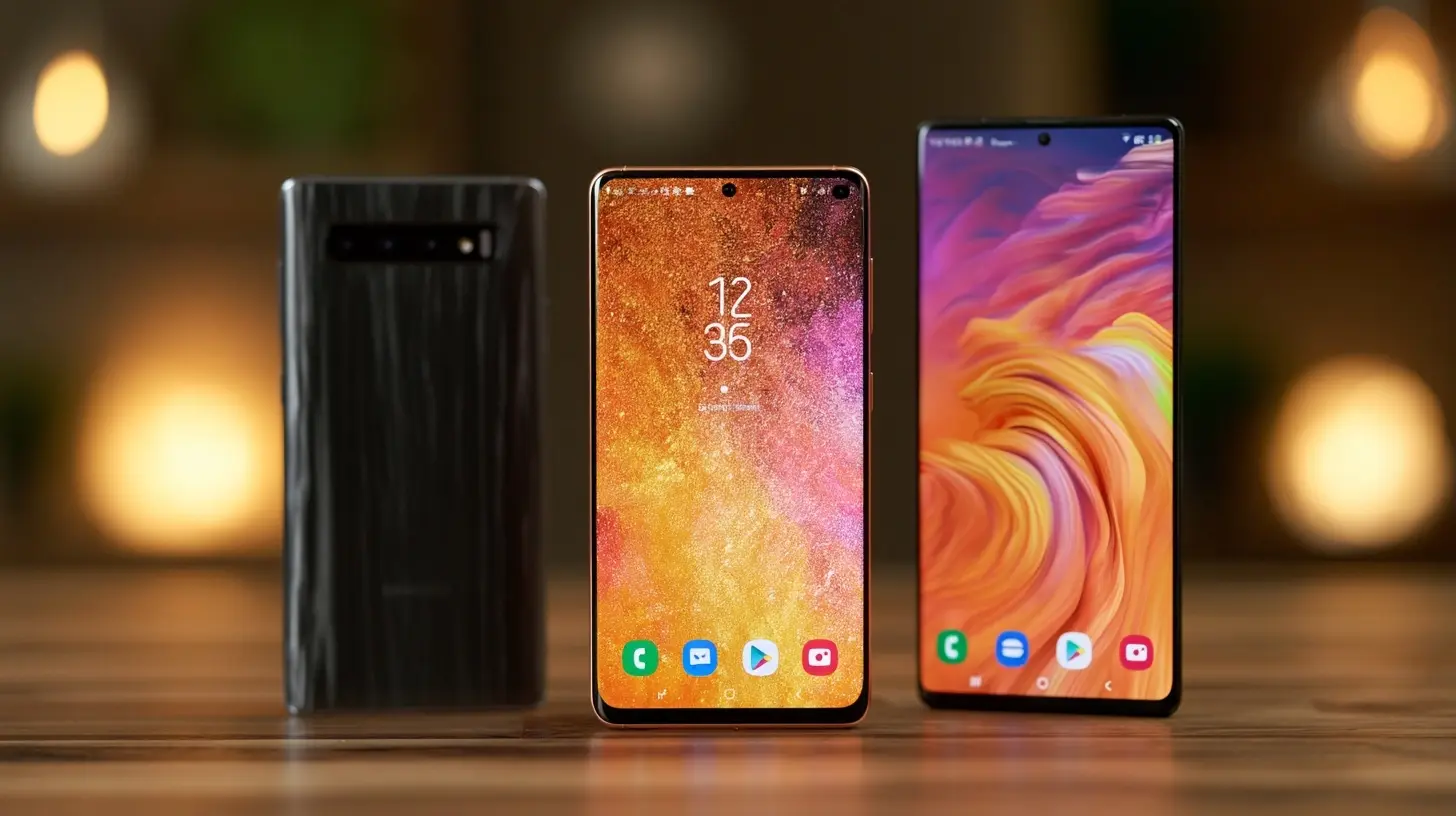
What "Flagship" Actually Means Now
Ten years ago, a flagship was easy to define. It had the fastest processor, the best screen, and the biggest price tag. That definition has fractured.Today, the flagship category splits into at least three distinct groups:
- The ultra-premium tier. Phones like the iPhone Pro Max line, the Samsung Galaxy Ultra line, and Google's Pixel Pro line. These push $1,100 to $1,300 and up. They compete on camera hardware, display quality, and increasingly on software features tied to AI.
- The standard flagship tier. The base iPhone, base Galaxy, and base Pixel. Same chips as the ultra models in most cases, but smaller screens, fewer camera lenses, and lower prices. Typically $700 to $900.
- The value flagship tier. Phones from OnePlus, Nothing, and various Chinese brands that use last-generation or slightly detuned chips but deliver 90 percent of the experience for 60 percent of the price.
The distinction matters because the marketing does not make it. A phone can carry the "flagship" label and still cut corners that will bother you in month six. The question is not whether a phone is a flagship. The question is which corners were cut and whether you will ever notice.
The Chipset Question: Why Raw Speed Stopped Mattering
Here is a fact that frustrates benchmark enthusiasts: a 2021 flagship chip still feels fast in 2025 for almost everything.Scrolling, messaging, video, maps, photos - these tasks were solved years ago. The Snapdragon 8 Gen 1 or Apple A15 handled them without strain. So when a new chip claims a 30 percent CPU improvement, that number rarely translates into a 30 percent better experience. It translates into marginally faster app launches and slightly better sustained performance under load.
Where the chip still matters:
1. Sustained gaming. If you play demanding titles for 30 minutes or more, thermal throttling is real. A phone with a better cooling system will hold frame rates longer than one with a faster chip and worse thermals. This is why gaming phones with active cooling fans exist.
2. Video export and heavy editing. If you shoot 4K ProRes or edit multi-layer video on your phone, the chip matters a lot. If you do not, it barely matters.
3. Longevity. A faster chip tends to stay usable longer. A phone that is overpowered today will still feel fine in four years. A phone that is merely adequate today will feel slow in three.
The practical takeaway: do not buy a phone because of the chip unless you have a specific workload that stresses it. Buy it because of the things you touch and look at every day - the screen, the battery, the camera, and the software.
Battery Life: The Only Spec That Never Lies
If there is one area where flagships consistently disappoint, it is battery life. And the reason is almost always the same: thinness.Manufacturers chase slim profiles because phones are fashion objects as much as tools. A phone that is 8.5mm thick feels premium in the hand. A phone that is 10mm thick feels chunky, even if it lasts two days. So batteries get squeezed, and capacity gets sacrificed for aesthetics.
This creates a genuine trade-off you should think about before buying:
- A slim phone with a 4,000 mAh battery will likely need a charge by late afternoon under heavy use. It will feel great in hand. It will also make you anxious on long travel days.
- A thicker phone with a 5,500 mAh battery will often last into a second day. It will feel heavier. You will stop carrying a power bank.
The best real-world battery performers in the current market tend to be phones that are slightly thicker and slightly heavier than their competitors. That is not a coincidence. It is physics.
One more thing worth understanding: charging speed and battery health are not the same as battery life. A phone that charges from 0 to 100 in 20 minutes is convenient, but fast charging generates heat, and heat degrades lithium-ion cells over time. If you plan to keep a phone for four or five years, charging it slowly overnight is measurably better for long-term capacity than blasting it with 120W every day. Most phones now offer a setting to limit charge to 80 percent, which is a genuinely useful feature that almost nobody enables.
Cameras: Where Flagships Justify Their Price, and Where They Do Not
Camera hardware is the single biggest reason people pay for a flagship over a mid-range phone. It is also the area where marketing is most misleading.The Megapixel Trap
A 200 megapixel sensor does not produce better photos than a 50 megapixel sensor by default. In most lighting conditions, it produces worse ones, because smaller pixels capture less light. The high megapixel count is useful mainly for cropping and for bright daylight shots where you want maximum detail.What actually matters:
- Sensor size. A larger sensor captures more light, which means cleaner photos in dim conditions. This is why a 1-inch sensor phone often beats a 200MP phone at night.
- Aperture. A wider aperture (lower f-number) lets in more light. f/1.6 is better than f/2.2 in low light.
- Processing. This is where Apple, Google, and Samsung differentiate themselves. The same sensor in two different phones can produce wildly different results because of how the software handles noise, color, and contrast.
The Zoom War
Periscope telephoto lenses have become the headline feature of ultra-premium phones. A 5x or 10x optical zoom is genuinely useful for concerts, wildlife, and architecture. But there is a catch: most people rarely shoot beyond 3x. If you are one of them, paying $300 extra for a 10x lens is poor value.Ask yourself honestly: how often did you zoom past 3x in the last year? If the answer is "almost never," the telephoto lens should not drive your purchase decision.
The Video Reality
For video, the gap between flagships is narrower than the marketing suggests, but Apple still holds an edge in one specific area: consistency. iPhone video tends to look the same across lenses, which makes editing easier. Android flagships often produce slightly different color science on the ultrawide versus the main lens, which creates visible jumps when you cut between clips.If you shoot video seriously, this matters more than any spec. If you shoot the occasional clip for social media, it does not.
Displays: Brightness, Refresh Rate, and the Things You Actually Feel
The display is the component you interact with most. It is also the one where flagship phones have genuinely improved the most in recent years.Three things matter:
1. Peak brightness. Modern flagship displays hit 1,500 to 2,500 nits in small areas. This sounds like a spec war, but it has real consequences: a brighter screen is readable in direct sunlight. If you live somewhere sunny, this is not a luxury, it is a requirement.
2. Refresh rate. 120Hz makes scrolling and animation feel dramatically smoother than 60Hz. Once you use it, going back is painful. Most flagships now offer variable refresh rates that drop to 1Hz when the screen is static, which saves battery. This is a genuine, useful innovation.
3. PWM dimming. This is the spec almost nobody talks about, and it matters if you get eye strain or headaches from screens. Many OLED displays use pulse-width modulation to control brightness, which means the screen flickers on and off rapidly. Some people are sensitive to this. Phones with high-frequency PWM dimming (above 1,920Hz) or DC dimming are noticeably more comfortable for those users. If you have ever felt eye strain from a phone that others find fine, this is worth researching before you buy.
Software and Updates: The Hidden Long-Term Cost
A flagship phone is a four to seven year purchase for most people, whether they admit it or not. The hardware will outlast the software support if you let it.This is where the brands separate sharply:
- Google and Samsung now offer seven years of OS and security updates on their flagship lines. That is a genuine commitment and it changes the economics of buying a phone. A $1,000 phone that lasts seven years costs about $143 per year.
- Apple typically supports iPhones with five to six years of major iOS updates, and security updates often continue longer.
- Most other Android brands offer three to five years. Some offer four. A few offer only two.
If you keep phones for a long time, update policy should be a top-three factor in your decision. A phone with better hardware and two years of updates is a worse long-term buy than a phone with slightly lesser hardware and seven years of updates.
There is also a subtler issue: update quality. Shipping an update is not the same as shipping a good one. Some brands push updates that introduce battery drain or break features and take weeks to fix. Reading user forums for a phone you are considering, specifically about how the last two major updates were received, tells you more than any review.
The AI Feature Problem
Every flagship now ships with AI features. Summarize this. Translate that. Erase this object. Generate this wallpaper.Here is the honest assessment: most of these features are used once or twice and then forgotten. The ones that stick tend to be invisible and practical:
- Call screening and transcription. Genuinely useful if you get spam calls.
- Photo editing tools that remove distractions. Useful occasionally, and improving fast.
- Live translation in messaging. Useful if you communicate across languages.
- Search that understands context. Useful when it works, frustrating when it does not.
The ones that do not stick tend to be generative. They are impressive in demos and awkward in real life. This does not mean AI is a gimmick. It means the value is uneven, and you should not pay a premium for a feature list you will not use. Ask yourself which specific AI features you would actually open weekly. If the answer is none, do not let AI marketing drive your purchase.
How to Actually Choose: A Practical Framework
Forget brand loyalty. Forget the spec sheet. Use this sequence instead.Step 1: Set a hard budget and stick to it.
Flagships depreciate fast. A phone that costs $1,200 today will be worth $500 in two years. If you are financing it over 36 months, you are paying interest on a depreciating asset. Buy what you can afford outright, or buy last year's flagship at a discount.
Step 2: List your three most common phone tasks.
Be honest. For most people it is messaging, browsing, photos, and maybe one game. That list eliminates most of the spec sheet instantly.
Step 3: Identify your one non-negotiable.
Battery life. Camera quality. Small size. Update longevity. Pick one thing that would make you regret the purchase if it were bad. Then weight your research toward it.
Step 4: Check the boring stuff.
Does it have the bands your carrier uses? Does it support the charging standard you already own? Does it have a headphone jack, a microSD slot, or an IR blaster if you care about those? These small details cause more daily annoyance than any chipset difference.
Step 5: Read long-term reviews, not launch reviews.
Launch reviews are written in a week. Long-term reviews are written after six months. Search for "six months later" reviews of any phone you are considering. They will tell you about battery degradation, update problems, and build quality issues that launch reviews miss.
Common Mistakes Buyers Make
- Buying for the camera they will not use. If you shoot in auto mode and share to social media, a mid-range phone's camera is nearly indistinguishable from a flagship's in good light.- Ignoring weight. A 240g phone sounds fine in a store. After two hours of holding it, it does not.
- Assuming bigger is better. A 6.8-inch screen is great for video and terrible for one-handed use. If you have average or small hands, a 6.1 to 6.3-inch phone will be more comfortable every single day.
- Upgrading every year. The year-over-year improvements in flagships have shrunk dramatically. A two-year upgrade cycle captures almost all the meaningful gains.
- Trusting carrier deals without reading them. "Free" phones usually come with 36-month bill credits and a locked device. The math often favors buying unlocked.
So Which Flagship Actually Delivers?
There is no single winner. There is only the phone that fits your specific life. But the pattern is consistent: the flagships that deliver are the ones that prioritize the things you touch and depend on, not the things that look good in a keynote.If you want the longest software support and the most consistent camera experience, the calculus points one direction. If you want the brightest display and the most versatile zoom system, it points another. If you want the best battery life and the fastest charging, it points somewhere else again.
The honest answer is that all current flagship phones are good. None of them are bad. The differences between them are smaller than the marketing suggests and larger than the spec sheet reveals. The winning move is not picking the "best" phone. It is picking the phone whose compromises you can live with for the next four years.
That is what delivering actually means.
all images in this post were generated using AI tools
Category:
Tech ReviewsAuthor:

John Peterson