What the Most Successful People Will Be Using in 2026
3 September 2026
The gap between people who merely survive the modern economy and those who thrive in it has never been about raw intelligence or even hard work. It is about leverage. The most successful people understand that their time, attention, and energy are finite, and they treat those resources like a venture capitalist treats capital: they invest only where the return is disproportionate.
By 2026, the tools that create that leverage will have shifted again. Not because of a single breakthrough technology, but because of a convergence of capabilities that have quietly matured over the last few years. The people who get ahead will not be the ones using the flashiest gadgets. They will be the ones using a specific set of systems, workflows, and mental models that amplify their judgment. This article is about those systems, what they actually do, why they matter, and where they fail.
The Shift from Automation to Orchestration
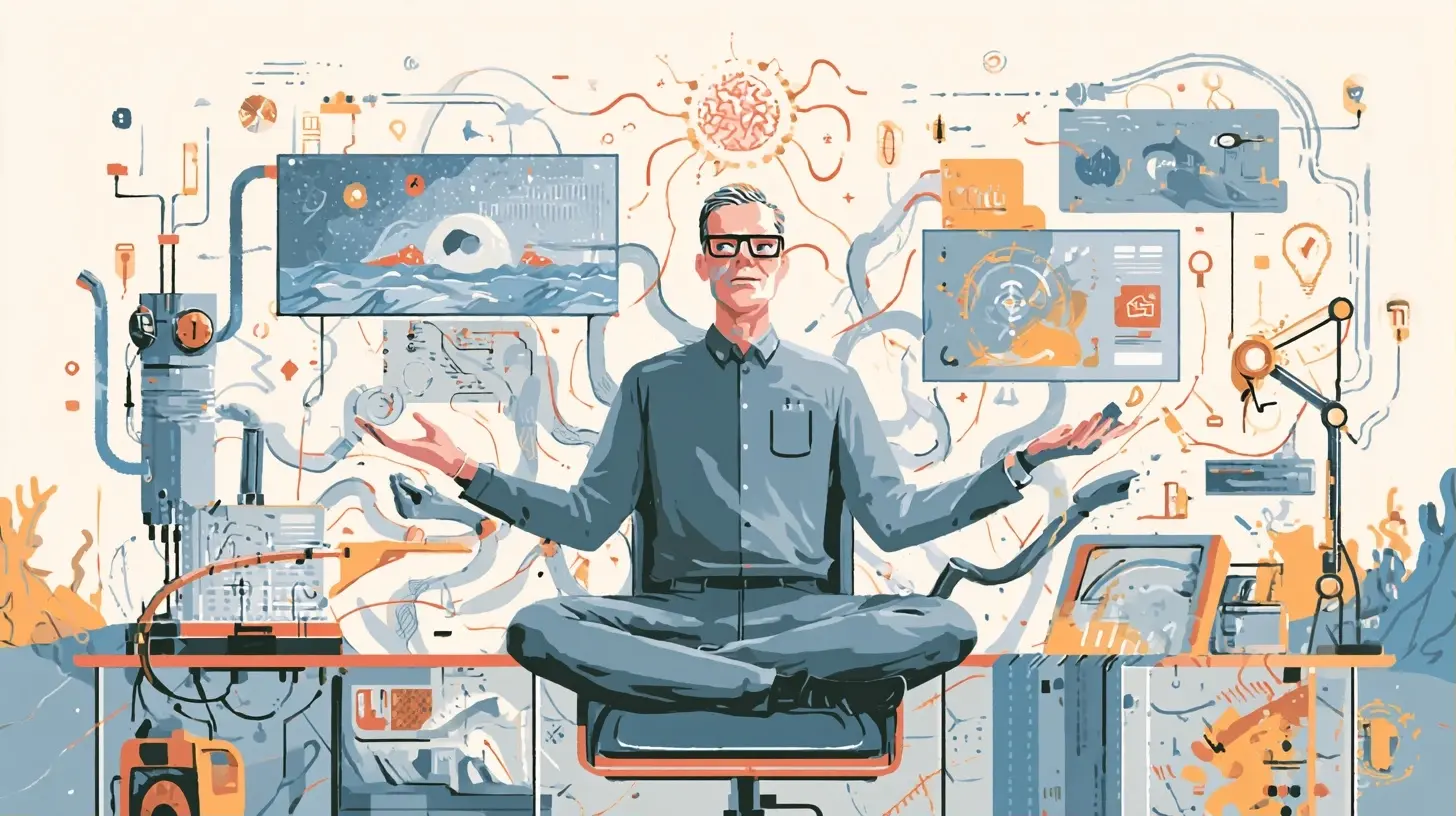
For the last decade, the buzzword was automation. We automated emails, scheduling, data entry, and basic customer service. But automation has a ceiling. It works well for tasks that are repetitive, predictable, and have a clear right answer. The moment a task involves ambiguity, context, or conflicting priorities, automation breaks down.The successful people in 2026 will have moved past automation into orchestration. Orchestration means you are not just setting up a rule-based trigger. You are managing a portfolio of AI agents, human assistants, and software tools that work together on a single outcome, with you as the conductor rather than the operator.
Consider a typical product launch. In 2023, a founder might have automated social media posts and used a template for press releases. By 2026, that same founder will be running an orchestration layer. One agent monitors market sentiment and competitor pricing in real time. Another drafts personalized outreach to the top fifty potential customers, but only after cross-referencing their recent public statements with the founder's product messaging. A third agent negotiates with the logistics provider based on volume forecasts. The founder's job is not to write the emails or check the spreadsheets. The founder's job is to set the strategic direction, review the agents' recommendations, and make the final call on trade-offs.
The distinction matters because automation saves you time on tasks you already understand. Orchestration saves you time on outcomes you could not have achieved alone. That is a different category of leverage. It is the difference between using a calculator and using a spreadsheet with macros. The calculator speeds up arithmetic. The spreadsheet lets you model scenarios you would never attempt by hand.
Personal AI Operators: Your Chief of Staff, Not Your Chatbot
By 2026, successful people will not be chatting with a generic AI assistant for random questions. They will have deployed what I call a personal AI operator. This is a persistent, context-aware system that has access to your calendar, your email, your project management tools, your customer relationship management system, and your financial accounts, with strict permission boundaries.The key difference between a chatbot and an operator is memory and initiative. A chatbot responds when you ask. An operator monitors your workflows and flags issues before you ask. For example, if you have a recurring meeting with a client every Monday at 10 AM, and the client's assistant emails to reschedule, your AI operator should detect the conflict, check your calendar for available slots, propose a new time based on your energy patterns (not just availability), and draft a confirmation email for your approval. It does not send it without you. But it does the tedious work of coordination.
The most successful people will use these operators not for generic tasks like summarizing documents, but for high-stakes coordination. They will use them to prepare for negotiations by pulling up the counterparty's history, recent news, and your own past commitments to them. They will use them to run pre-mortems on major decisions, where the AI generates a list of reasons a project might fail, based on your actual data and industry patterns.
There is a common misconception that this will make people lazy or outsource their thinking. The opposite is true. An AI operator is only as good as the priorities you give it. If you do not have clear goals, clear definitions of what good looks like, and clear boundaries for what the AI can touch, it will either be useless or harmful. The successful people will spend more time, not less, on clarifying their intent. The AI does the drudgery, but the human does the value judgment.

The Rise of the "Second Brain" as a Competitive Weapon
The concept of a second brain, a personal knowledge management system, has been around for a few years. But most implementations have been hobbyist level. People collect notes in Notion or Obsidian, tag them, and then never look at them again. That is not a second brain. That is a digital attic.By 2026, the most successful people will have transformed their knowledge management from a storage system into a synthesis engine. The difference is that a storage system retrieves what you put in. A synthesis engine combines what you put in with new information and produces something you did not directly create.
Here is how that works in practice. Imagine you are a venture capitalist who reads fifty articles a week, attends two conferences a month, and has hundreds of conversations with founders. A traditional note-taking system would have separate files for each article, each conference, each meeting. A synthesis engine, however, links these together based on underlying concepts. It notices that three separate founders mentioned a specific supply chain bottleneck in Southeast Asia. It also notices that an academic paper you read six months ago predicted that bottleneck. It then surfaces a synthesis: a one-page memo that connects the academic theory with the on-the-ground reality, and suggests a question you should ask the next founder you meet in that sector.
This is not magic. It is the result of a system that uses embeddings, semantic search, and automated linking. But the value is not in the technology. The value is in the practice of feeding the system high-quality raw material and then reviewing its syntheses weekly. The most successful people will treat this as a discipline, not a tool. They will spend thirty minutes every Friday reviewing what their second brain surfaced, pruning the noise, and refining the questions it should be tracking.
The common mistake is trying to build this system overnight and expecting it to work. It takes time to accumulate enough data for the synthesis to be meaningful. Start with a narrow domain, feed it rigorously for three months, and only then expand. Trying to capture everything from day one leads to a system that surfaces trivia instead of insight.

Decision Intelligence: Moving Beyond Gut Feel
There is a persistent myth in business that great leaders rely on intuition. The truth is that great leaders rely on intuition that has been trained by years of feedback. But even the best intuition fails when the environment changes rapidly. By 2026, successful people will supplement intuition with decision intelligence, a structured approach to making high-stakes choices.Decision intelligence is not the same as data analytics. Analytics tells you what happened. Decision intelligence tells you what to do about it, and more importantly, it forces you to make your reasoning explicit before you commit. In practice, this means using software that helps you define your decision criteria, weigh them, consider alternative scenarios, and track the outcome of your decision over time.
A concrete example. You are a CEO deciding whether to acquire a smaller competitor. Your gut says yes because the technology is complementary. A decision intelligence tool would force you to list your criteria: strategic fit, cultural compatibility, customer overlap, integration cost, and opportunity cost. You would then assign weights to each criterion. The tool would challenge you on your weights. Why does strategic fit matter more than cultural compatibility? Is that because you have data, or because you are excited about the deal? It would then generate a decision memo that you can review, share with your board, and revisit in six months to see if your reasoning was sound.
The benefit is not that the tool makes the decision for you. The benefit is that it makes your thinking visible and testable. Most bad decisions are not bad because the leader was stupid. They are bad because the leader made an implicit assumption that was never stated or challenged. Decision intelligence surfaces those assumptions.
The trade-off is time. For small, reversible decisions, this process is overkill. You should not run a full decision analysis on which coffee vendor to use. The successful people will reserve this for decisions that are large, irreversible, or have significant downstream consequences. The discipline of knowing which decisions deserve this treatment is itself a competitive advantage.
The Curated Information Diet
In 2024, everyone was drowning in information. By 2026, the problem will not be access. It will be trust. With AI generating an ever larger share of online content, both text and video, the ability to distinguish signal from noise, and fact from plausible fiction, becomes the core skill.The most successful people will not try to consume more. They will consume less, but with higher intent. They will build what I call a curated information diet. This is not about following fewer people on social media. It is about creating a personal filtering layer that sits between the internet and your attention.
That filtering layer will have three components. First, a list of primary sources that you trust because you have verified their track record over time. These might be specific industry journals, specific analysts, or specific researchers. Second, a set of AI agents that scan the broader landscape and only surface items that meet your explicit criteria: relevance to your current projects, novelty relative to what you already know, and credibility of the source. Third, a weekly review ritual where you spend an hour reading the full text of the most important pieces, not just summaries.
The mistake most people make is treating their information diet as a passive feed. They scroll, they skim, they feel informed. But passive consumption does not build expertise. The successful people will treat their information diet like a research project. They will have a question they are trying to answer, a thesis they are trying to test, or a gap they are trying to fill. Every piece of content is either useful for that purpose or it is noise.
This also means being comfortable with missing out. The fear of missing a critical piece of news is powerful. But in practice, the truly critical news will reach you through your network or through the direct signals you have set up. The rest is entertainment. The most successful people in 2026 will have made peace with the fact that they will not know everything, and they will focus on knowing the few things that matter most for their specific goals.
The New Collaboration Stack: Async-First with AI Mediation
Remote work is not going away, but the way we collaborate is changing. The old model was synchronous: meetings, phone calls, real-time chats. The new model, which will be dominant among high-performing teams by 2026, is async-first with AI mediation.Async-first means that the default mode of communication is written, structured, and asynchronous. You write a detailed brief, your colleagues respond when they have time, and the conversation is recorded for future reference. This is not new. But what is new is AI mediation. The AI does not just transcribe or summarize. It actively manages the flow of information between people.
For example, instead of having a meeting with ten people where two dominate the conversation and eight stay silent, the AI will collect written inputs from everyone before the meeting. It will cluster similar opinions, highlight disagreements, and generate a summary of the key decision points. The actual meeting, if one is needed, will then be short and focused only on the genuine disagreements that could not be resolved in writing.
This has a profound effect on who gets heard. In a traditional meeting, the loudest and most confident voices win. In an async-first system with AI mediation, ideas are evaluated on their merits, because the AI strips out the social context. Introverts, junior team members, and people who think more slowly but more deeply get a fairer chance. The most successful leaders will use this not because it is egalitarian, but because it produces better decisions. They will get access to the full range of thinking in their organization, not just the thinking of the most assertive.
The downside is that written communication requires skill. Not everyone can express a nuanced idea clearly in writing. The successful organizations will invest in training their people to write well, because writing becomes the primary interface for collaboration. They will also set strict norms about response times and document length, so that the async system does not become a source of endless email threads.
The End of the Traditional To-Do List
The simple to-do list is dead for high performers. Not because tasks have gone away, but because the linear, flat list cannot handle the complexity of modern work. By 2026, successful people will use what I call an outcome-based task system, where tasks are not just items to check off, but are explicitly linked to the outcomes they serve, the resources they require, and the constraints they face.This system works like this. Instead of a list that says "call client, write proposal, review budget," you have a set of outcomes. For example, "close the Smith account deal" is an outcome. Under that outcome, you have tasks, but each task is tagged with its priority, its estimated time, its dependency on other tasks, and the energy level required to do it well. The system then helps you schedule tasks not just based on deadlines, but based on your actual cognitive state.
If you are a morning person, your system will schedule deep work like writing the proposal for 9 AM. It will schedule routine calls for the afternoon when your energy dips. It will automatically reschedule tasks that are blocked on someone else's input, so you do not waste time staring at a task you cannot complete.
The most successful people will take this one step further. They will review their outcomes weekly and ruthlessly prune the ones that no longer matter. The biggest productivity killer is not procrastination. It is working diligently on tasks that should not be done at all. The system should force you to ask: if I did not have this task on my list, would I start it today? If the answer is no, then it goes away.
This requires a level of honesty that many people lack. We keep tasks on our lists because they make us feel productive, or because we are afraid of letting someone down, or because we started them and do not want to waste the effort. The successful people will have systems that make it easy to kill tasks, not just complete them.
The Privacy and Security Layer
As we rely more on AI operators, second brains, and decision intelligence, the attack surface grows. By 2026, the most successful people will treat their personal data infrastructure with the same seriousness as their physical security. This is not paranoia. It is risk management.The threat is not just hackers stealing your credit card. It is the subtle manipulation of your information. If an AI operator is reading your email and summarizing your priorities, then whoever controls that operator controls a lens into your thinking. If that operator is compromised, an attacker could subtly influence your decisions by feeding you misleading information that appears to come from your own trusted sources.
The successful people will take three steps. First, they will use self-hosted or locally run AI models for their most sensitive work. This is slower and less convenient, but it means their data never leaves their control. Second, they will use separate systems for their public-facing work and their private strategic thinking. The public system can be convenient and cloud-based. The private system is isolated. Third, they will conduct regular audits of what their AI systems have access to, and they will revoke access that is not currently needed.
The common mistake is assuming that the big tech companies will protect you. They will protect you from external threats, but they will also use your data to train their models and to target you with services. That is not malicious, but it is not aligned with your interests. The most successful people will not necessarily be paranoid, but they will be deliberate about what they share with whom.
The Human Advantage: Judgment and Relationship
After all this talk of AI, orchestration, and decision intelligence, there is a risk of sounding like a techno-optimist who believes that the right software will solve everything. That is not the case. The most successful people in 2026 will still have one advantage that no AI can replicate: the ability to make judgment calls in situations with no clear right answer, and the ability to build deep, trusting relationships with other humans.AI can give you a probability that a certain decision will work. It cannot tell you whether you should accept a 70 percent chance of a good outcome when the 30 percent chance is catastrophic. That is a judgment call based on your values, your risk tolerance, and your long-term strategy. AI can help you prepare for a difficult conversation, but it cannot have the conversation for you. It cannot read the room, sense the unspoken tension, or build the rapport that comes from genuine human presence.
The most successful people will use their AI systems to free up their time and attention for exactly these activities. They will not spend their days on email triage or schedule coordination. They will spend their days on high-stakes negotiations, on mentoring their key people, on building relationships with customers and partners, and on thinking deeply about the future of their industry.
This means that the skills of emotional intelligence, empathy, and persuasion become more valuable, not less. In a world where everyone has access to the same AI tools, the differentiator is not the tool. It is how well you use it, and how well you work with the humans around you.
Practical Steps to Prepare Today
If you want to be among the successful people using these tools in 2026, you do not need to wait for the future. You can start building the foundation today.First, pick one workflow that is painful and repetitive, and build a personal AI operator for it. Start with something low stakes, like meeting scheduling or email drafting. Do not try to automate your entire life. Get comfortable with giving an AI access to a small slice of your data and seeing how it performs.
Second, start your second brain with a single domain. Choose something you are actively working on, and feed it every piece of relevant information for three months. Review the syntheses weekly. Do not add a second domain until the first one is producing useful insights.
Third, write down your top three outcomes for the next quarter. Then, for each outcome, list the three biggest assumptions that have to be true for you to achieve it. Use a simple spreadsheet to track those assumptions monthly. This is the beginning of decision intelligence, and it does not require any software beyond a basic tool.
Fourth, audit your information diet. Unfollow or mute the accounts that produce noise. Subscribe to three primary sources that you trust. Set up a weekly hour to read deeply, not skim.
Finally, take one hour this week to review what you are doing that does not need to be done. Kill one task, one project, or one commitment. The goal is not to be busier. The goal is to have more space for the work that only you can do.
The future belongs to those who use tools to amplify their judgment, not replace it. The technology in 2026 will be powerful, but it will still be a tool. The most successful people will be the ones who understand that the tool is only as good as the hand that wields it, and the hand is only as good as the mind that guides it.
all images in this post were generated using AI tools
Category:
Productivity AppsAuthor:

John Peterson