Exploring the Future of Robotic Process Automation in the Workplace
5 March 2026
The future is here, and it’s more automated than ever! Imagine a workplace where repetitive tasks are handled seamlessly by robots, leaving employees to focus on more creative and strategic work. Sounds like science fiction, right? Well, it's not. This is all thanks to Robotic Process Automation (RPA), a technology that's making waves in industries worldwide.
But what exactly is RPA? And more importantly, what does its future look like in the workplace? Let's dive deep into this fascinating topic and explore how RPA is changing the game, not just today, but for years to come.
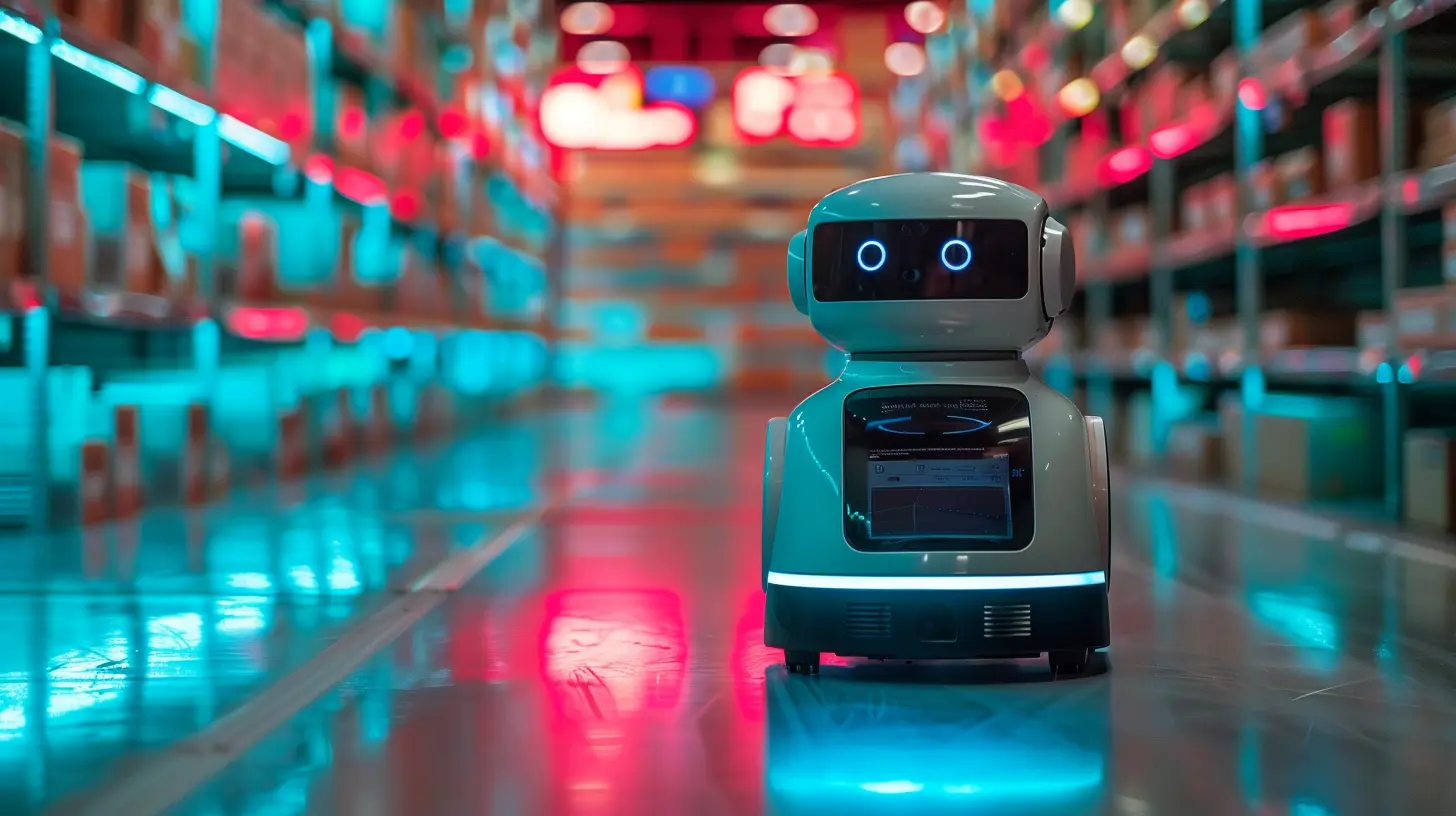
What Is Robotic Process Automation (RPA)?
Before we start imagining a future filled with robots, let’s first clarify what Robotic Process Automation is. Despite the word "robotic" being in the name, RPA doesn’t refer to physical robots. It’s not about having metallic beings walking around your office, but rather software robots, or “bots,” that can mimic human actions.RPA is a technology that allows businesses to automate repetitive tasks that are typically performed by humans. These tasks could be anything from data entry, invoice processing, customer service inquiries, to handling payroll. Essentially, if it's a rule-based, repetitive task, RPA can take care of it.
In simpler terms, think of RPA as a super-efficient worker who never gets tired, never makes mistakes, and can work 24/7 without taking a break. Sounds pretty awesome, right?

The Current Role of RPA in the Workplace
Today, RPA is already playing a significant role in many workplaces. Businesses are using RPA to improve efficiency, reduce costs, and minimize human error. The beauty of RPA is that it can be integrated with existing systems without the need for overhauling IT infrastructure.Industries like banking, healthcare, and manufacturing have been early adopters of RPA. Banks use RPA to automate tasks like verifying loan applications, while healthcare providers use it to manage patient records more efficiently. Manufacturing? Well, they use RPA to streamline supply chains and automate quality checks.
But here's the kicker. While RPA is fantastic for repetitive tasks, its current capabilities are somewhat limited. It follows predefined rules, which means it can’t handle complex decision-making or adapt to new situations. But that’s about to change.

The Future of RPA: More Than Just Automation
So, what does the future hold for RPA? Well, it’s about to get a lot smarter. And when I say smarter, I’m talking about combining RPA with Artificial Intelligence (AI) and Machine Learning (ML). This is where things get really exciting.1. Intelligent Automation: The Next Evolution
Today’s RPA bots are like super-efficient assistants, but they still need humans to tell them what to do. The future, however, is all about intelligent automation. This means RPA will not only automate tasks but also learn from past data, make decisions, and even predict future outcomes.Imagine an RPA bot that can analyze customer data, predict buying behavior, and automatically adjust marketing strategies based on those predictions. That’s where we’re headed, and it’s called Intelligent Process Automation (IPA). With IPA, businesses will be able to automate not just simple tasks, but also complex processes that require reasoning and judgment.
It’s like giving your existing RPA bots a brain, enabling them to think and act like humans—but far faster and more accurately.
2. RPA and AI: A Match Made in Tech Heaven
On its own, RPA is powerful, but when you add AI to the mix, it becomes unstoppable. AI will enable RPA bots to process unstructured data like emails, images, and videos—something that’s beyond the capabilities of today’s RPA.For example, imagine an RPA bot that can automatically scan resumes, analyze them, and pick the best candidates for a job. Or a bot that can read customer complaints from social media and respond with personalized solutions. This is the future of RPA, and it's closer than you might think.
By integrating AI with RPA, businesses will be able to automate tasks that require natural language processing, image recognition, and even sentiment analysis. This opens up a whole new world of possibilities, from automating customer service to fraud detection.
3. The Rise of Hyperautomation
You’ve probably heard the term “hyperautomation” floating around, and it’s not just a buzzword. Hyperautomation refers to the concept of automating everything that can be automated in a business. It’s about taking RPA and AI to the next level by creating a fully automated business ecosystem.With hyperautomation, businesses can automate entire workflows, from start to finish. Imagine an insurance company that can automatically process claims, verify documents, and issue payments without any human intervention. Or a retail business that can manage its entire supply chain, from inventory management to shipping, with just a few clicks.
In short, hyperautomation is the future of business operations. It’s not just about replacing human workers; it’s about creating a more efficient, agile, and scalable business model.

The Impact on Jobs: Will RPA Replace Humans?
Now, I know what you’re thinking. If RPA is going to automate so many tasks, what will happen to human jobs? Will robots take over the workplace and leave us all jobless?The short answer is no. While RPA will undoubtedly change the nature of work, it’s not going to replace humans entirely. Instead, it will augment human capabilities, allowing us to focus on higher-value tasks that require creativity, critical thinking, and emotional intelligence—things robots can’t do (at least not yet!).
In fact, many experts believe that RPA will create new job opportunities. As businesses adopt RPA, they’ll need skilled workers who can design, implement, and manage these automation systems. Additionally, employees will have more time to focus on innovation, problem-solving, and strategy, which are crucial for business growth.
Think of RPA as your trusty assistant, handling the mundane tasks so you can focus on the big picture. It’s not about replacing humans; it’s about empowering them to do their best work.
The Benefits of RPA in the Future Workplace
So, why should businesses invest in RPA? What’s in it for them? Well, the benefits are pretty significant. Let’s break it down.1. Increased Efficiency
RPA bots can work faster than humans and don’t require breaks, sleep, or time off. This means businesses can get more done in less time, leading to increased productivity and efficiency.2. Cost Savings
By automating repetitive tasks, businesses can save money on labor costs. Plus, RPA reduces the risk of human error, which can be costly to fix. It’s a win-win.3. Better Customer Experience
With RPA handling routine tasks, businesses can focus on improving customer experience. For example, customer service teams can spend more time addressing complex issues rather than answering basic inquiries.4. Scalability
RPA allows businesses to scale their operations quickly and efficiently. Whether you’re a small business or a large enterprise, RPA can be customized to meet your unique needs and grow with your business.5. Enhanced Accuracy
Humans make mistakes—lots of them. RPA bots, on the other hand, follow rules to the letter, ensuring tasks are completed with 100% accuracy. This is especially valuable in industries like finance and healthcare, where errors can have serious consequences.
Challenges and Considerations
Of course, no technology is without its challenges, and RPA is no exception. As businesses adopt RPA, they’ll need to consider issues like data security, integration with existing systems, and the potential for job displacement.Additionally, as RPA becomes more intelligent, there will be ethical concerns around the use of AI in decision-making processes. Businesses will need to ensure that their RPA systems are transparent, fair, and unbiased.
But despite these challenges, the future of RPA looks incredibly promising. With the right strategy and implementation, RPA can transform the workplace for the better.
Conclusion: The Dawn of a New Era
Robotic Process Automation is no longer just a buzzword; it’s a game-changing technology that’s here to stay. As we move into the future, we’re going to see RPA evolve from simple task automation to intelligent process automation, powered by AI and machine learning.The workplace of tomorrow will be more efficient, more productive, and more innovative, thanks to RPA. But it’s important to remember that RPA is not about replacing humans. It’s about creating a partnership between humans and bots, where each can focus on what they do best.
So, are you ready to embrace the future of work? Because it’s already knocking on your door.
all images in this post were generated using AI tools
Category:
Robotic Process AutomationAuthor:

John Peterson
Discussion
rate this article
2 comments
Amira Sharpe
Excited for a future where robots tackle tedious tasks, leaving us to innovate and enjoy work more!
March 30, 2026 at 11:04 AM
John Peterson
Thank you! It's an exciting vision, and robotic process automation has great potential to enhance our creativity and productivity at work.
Morrow McMahan
This article effectively highlights the potential benefits of Robotic Process Automation in enhancing workplace efficiency while also addressing concerns about job displacement and ethical considerations, prompting a balanced discussion on the technology's future impact.
March 6, 2026 at 1:05 PM
John Peterson
Thank you for your insightful comment! I'm glad you found the article informative and balanced in discussing both the benefits and challenges of Robotic Process Automation.